
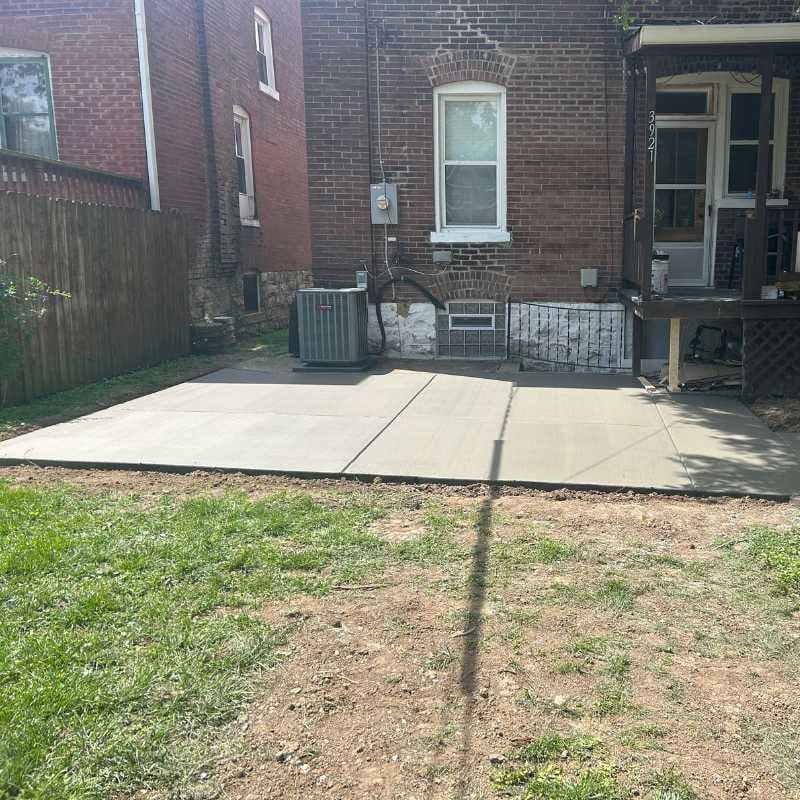
Patio Replacement
Concrete Patio Replacement in St. Charles for Sunken, Cracked or Heaved Patios
Concrete patio replacement in St. Charles is the right answer when your patio has sunk, cracked badly, heaved, or tilts water toward the house. Midwest Hardscapes tears out the failed slab, finds out why it failed, rebuilds the base and drainage, and pours a new patio that is built to avoid the same problem. Bryan will also tell you honestly if a repair would do the job, because not every patio needs to come out.
01
Signs Your Concrete Patio Needs Replacing
Some patio problems are cosmetic and some are structural. The signs below usually mean the slab, or the ground under it, has stopped doing its job.
A patio that has dropped on one side or pulled away from the house is a bigger concern than a single hairline crack. If water now runs toward your foundation, or sits in a low spot after every rain, the patio is working against you.
- Sections that have sunk, tilted or settled unevenly
- Cracks that are wide, offset (one side higher than the other) or spreading
- Heaved or lifted slabs, often near trees, steps or a downspout
- Water pooling on the surface or running toward the house
- Crumbling, flaking or patched areas that keep failing
- A patio that is too small or poorly shaped for how you use the yard
02
Why Your Original Patio Failed
Patios fail from the bottom up. Knowing which cause applies to yours is the whole point of the assessment, because if the cause is not corrected, a new slab will fail the same way.
The most common cause is the base. Older homes' original concrete was often poured without proper base compaction, so the soil settles unevenly and the slab cracks and sinks along the soft spots. Skipping compaction is a shortcut some contractors take, and you cannot see it once the concrete is in.
Drainage is the second cause. A patio that slopes toward the house, or that sits where downspouts and runoff collect, lets water wash out or soften the ground beneath it. In our region, water in clay soil freezes and thaws repeatedly through the winter, and each cycle can shift the slab a little more.
The third is thickness and reinforcement. A slab that was poured too thin, or reinforced with material that rusts and expands, is more likely to crack. Our guide on why concrete fails explains each cause in more detail.
03
Repair or Replace? An Honest Answer
We would rather tell you the truth than sell you a patio. If your patio has a few hairline cracks and is still level and draining properly, you probably do not need to replace it. Sealing or patching can be a reasonable choice.
Replacement makes sense when the patio has settled or heaved, when cracking is widespread, when water drains the wrong way, or when you have already patched the same area more than once. Patching over movement does not stop the movement. If the ground under the slab is moving, the surface repair will not last.
If we find a problem outside our scope, such as something that looks like a foundation issue near the house, we will point you to the right specialist instead of pouring over it. You get the assessment from Bryan or the crew lead who knows the concrete, not from a salesperson working on commission.
Repair, replace or wait?
Repair or replace? Here is how we decide.
We look at why the concrete failed before we recommend anything.
| Surface | Often a repair | Often a replacement |
|---|---|---|
| Driveway | Surface wear or a few narrow cracks on a slab that is still sitting firmly and draining well. | Widespread cracking, settling or heaving, or water pooling because the base underneath has failed. |
| Concrete floor | Localized cracks or surface damage where the slab underneath is stable. | A floor that has settled or broken up in sections. Coatings such as epoxy are cosmetic and will not fix a failing slab. |
| Curb | Minor chips or edge damage that we can patch cleanly. | Curbs broken along their length, such as from plow impacts, or sections that no longer hold their shape. |
What you can't see matters most
Five Layers, From the Ground Up
The right base and thickness depend on your soil, how the surface will be used and the loads it will carry. Bryan sets those details for your site, not from a template.
- 01
Prepared subgrade
We excavate and shape the soil so the slab sits on firm, even ground. Soft spots and poor drainage get fixed here, before anything is poured.
- 02
Compacted base rock
A layer of compacted 1-inch minus base rock spreads the load and helps water move away. Skipping compaction is a shortcut that shows up years later.
- 03
Reinforcement
Concrete handles weight well but lacks tensile strength, so we reinforce it. We use fiberglass rebar because it won't rust and expand inside the slab the way steel can.
- 04
The slab
Driveways and patios are typically poured at a consistent 4 inches, with the right mix for how the surface will be used.
- 05
Grading, drainage and joints
We slope the surface so water drains away and plan control joints so that if concrete cracks, it cracks along a line we chose.
04
Tearing Out the Old Patio Without Damaging Your House or Landscaping
Demolition is the part homeowners worry about most, and the concern is fair. The old slab sits next to your foundation, your steps, your door thresholds and often your garden beds. We plan the tear-out so it stays away from those things.
We look at what is attached before anything breaks: where the patio meets the house, where steps connect, and where utilities or hose bibs sit nearby. We protect the surfaces around the work area, break the slab out in controlled sections, and haul the debris away.
Landscaping matters to us too. Reviewers have noted that the crew takes care around gardens and neighbors and cleans up at the end of each day. If you have plants you want to keep, show us at the site visit and we will plan access around them. A tidy job site is part of doing the job right.
05
What We Do Differently on the Rebuild
Replacement is a chance to correct what the first builder skipped. Once the old slab is out, we look at the soil, fix any soft spots, and rebuild from the ground up.
We typically place compacted base rock (1-inch minus), grade it so water drains away from the house, and form the patio at a consistent 4 inches. The right thickness depends on the use, and we adjust if you plan to put something heavy on the patio. We reinforce with fiberglass rebar because it will not rust and expand inside the slab the way steel can.
Control joints are planned before the pour so any cracking from shrinkage follows planned lines. We cannot promise a patio that will never move, and nobody honest can. We build to limit movement and to direct it where it does the least harm.
06
Fixing Drainage, Steps and Transitions at the House
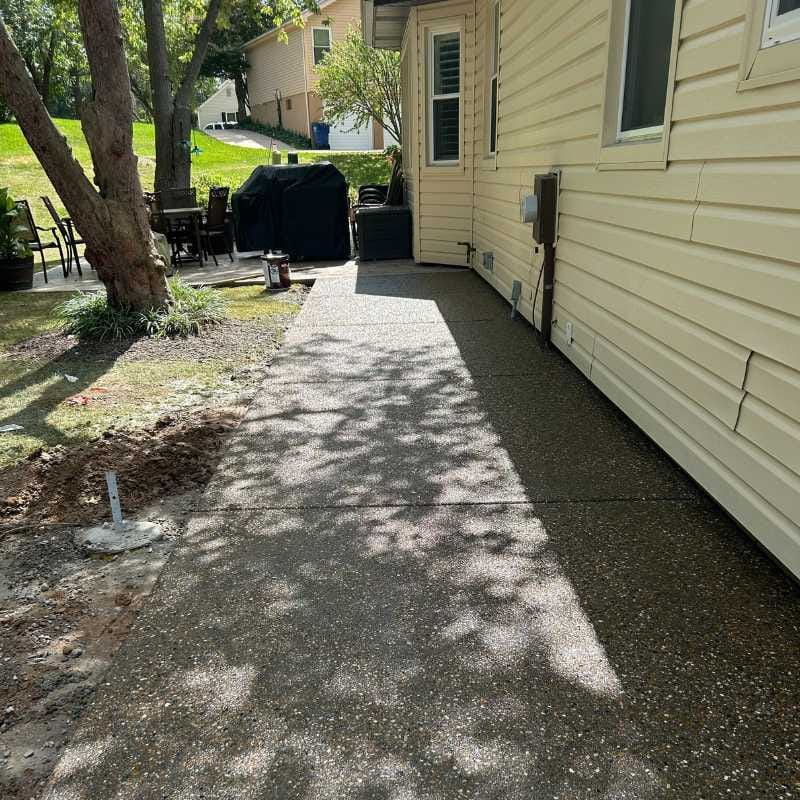
A replacement patio is the best time to fix the places where the old one caused trouble. If water pooled, we regrade so it leaves the slab and moves away from the foundation. If the patio met the door at the wrong height, or the steps had settled, we correct the transitions.
Downspouts are often part of the story. If a downspout empties onto the patio edge, tell us. Redirecting it can protect the new slab and the ground under it.
We also look at where the patio connects to walkways and other surfaces, so everything lines up and sheds water in the same direction. A clean transition is a small detail that makes a patio feel finished.
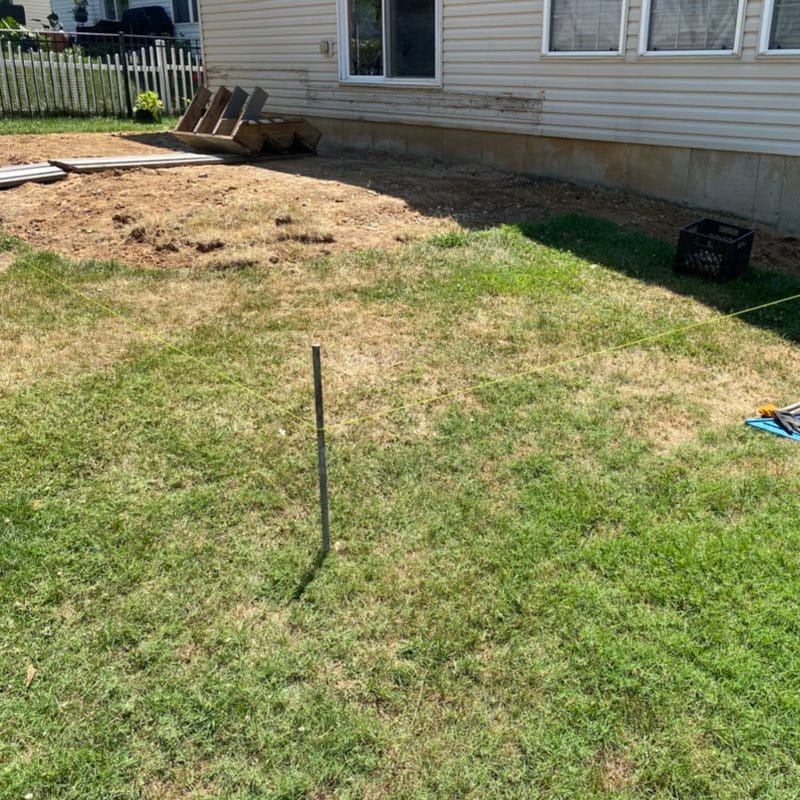
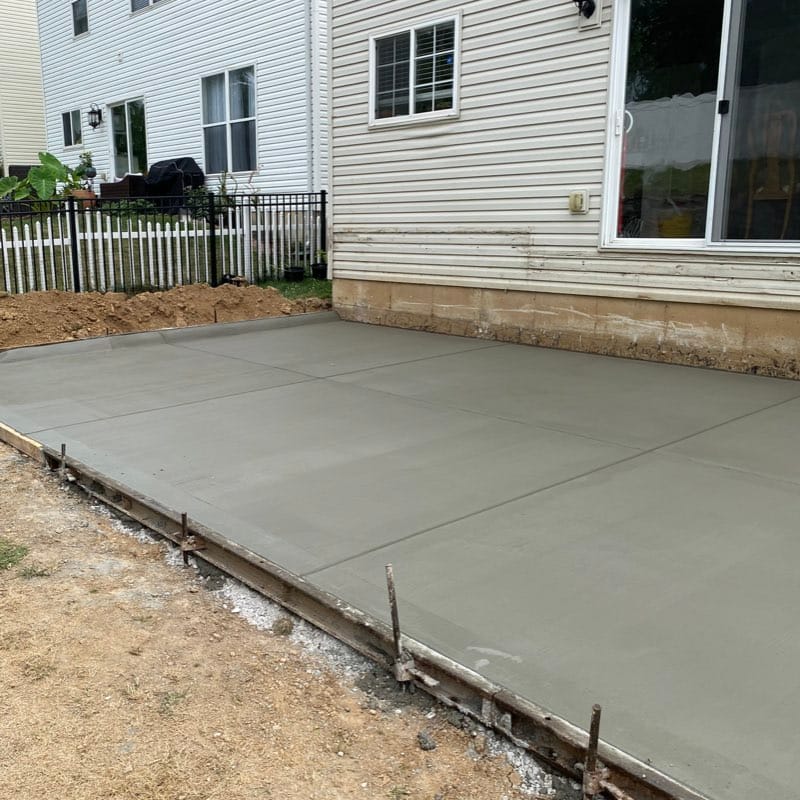
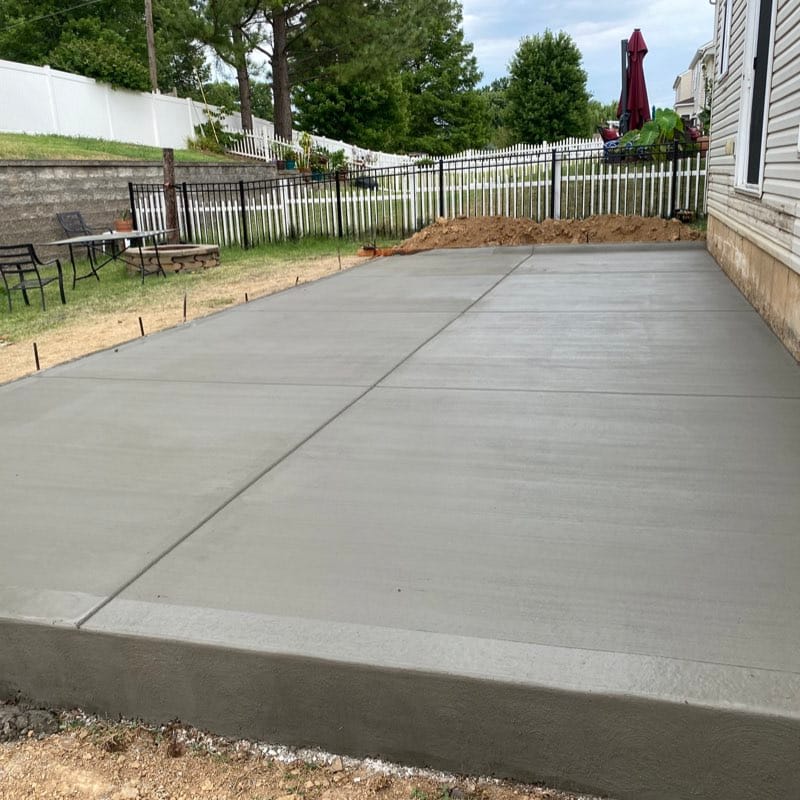
If your patio has sunk, cracked or started draining toward the house, we would be glad to look at it. Midwest Hardscapes handles concrete patio replacement in St. Charles and across St. Louis, with over 33 years of experience in concrete behind the crew. Request a free estimate, and Bryan will tell you honestly whether you need concrete patio replacement or a simpler fix.
Straight answers
Questions about concrete patio replacement
Should I repair or replace my cracked concrete patio?
Repair a patio that is still level, still draining away from the house and has only a few hairline cracks. Replace it when it has sunk, heaved, drains the wrong way or has widespread cracking. If the ground under it keeps moving, surface repairs will not hold. Bryan will tell you which applies.
Why did my patio sink?
Usually the soil under it settled or washed out. Poorly compacted base, water collecting under the slab, and freeze-thaw cycles in clay soil are the common causes. Sinking is a base and drainage problem, which is why we rebuild from the ground up instead of pouring over the old slab.
Can you pour new concrete over my old patio?
Not reliably. Large areas of concrete cannot be resurfaced with dependable results when the problem is settlement or movement underneath. Resurfacing hides the surface, not the cause. If the old slab is truly sound, we will say so, but most failed patios need to come out.
Will tearing out my patio damage the house or my landscaping?
We plan the demolition to avoid that. We look at the foundation, steps, thresholds and garden beds first, protect what is nearby, and break the slab out in controlled sections. Show us any plants you want to keep and we will plan around them.
What causes a concrete patio to heave?
Water under the slab that freezes and expands, tree roots, and unstable soil can all lift a section. In Missouri, repeated freeze-thaw cycles make it worse. We look at the cause first, then correct the drainage and base so the new patio is not built on the same problem.
How long does concrete patio replacement take?
Installs often take 2 to 3 days of work depending on size and access. We do not promise a one-day finish, because demolition, base corrections and weather change the schedule. Concrete reaches its design strength around 28 days, so wait on heavy loads.
Can I change the size or shape of my patio when I replace it?
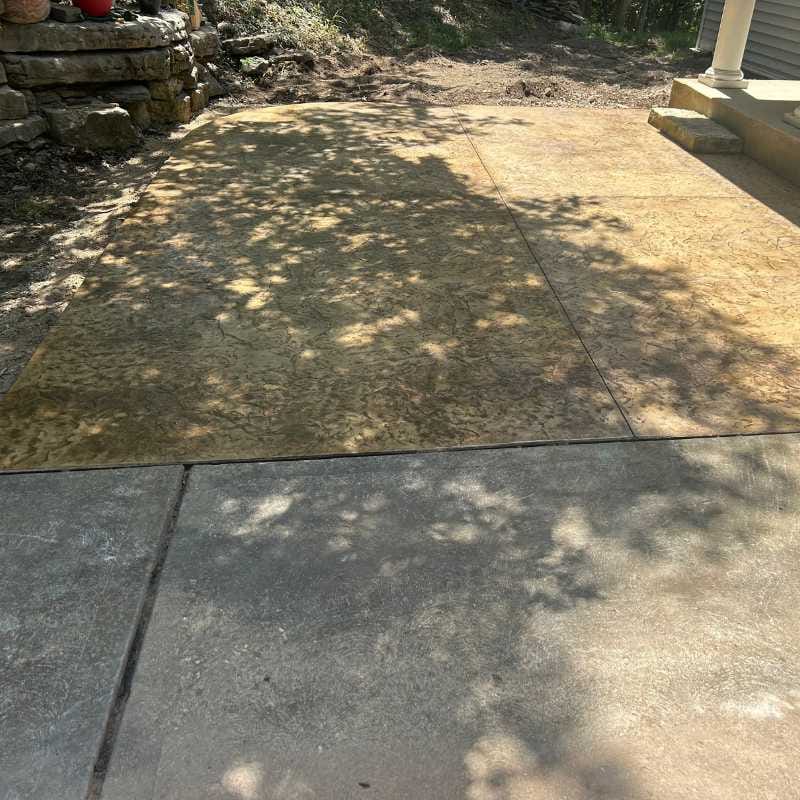
Yes, and it is the best time to do it. If the old patio was too small or the wrong shape for the way you use the yard, the demolition and base work are already happening, so resizing or reshaping costs far less effort than doing it later. You can keep a standard broom finish or step up to a decorative one such as stamped concrete. If you are planning something new rather than only fixing what failed, our concrete patio installation page covers layouts, extensions and outdoor living plans. Abdullah Hampton's review: "The wife and I LOVE the new patio!"
What does patio replacement cost?
It depends on the patio, so we do not post prices. The main factors are demolition and haul-off of the old slab, access for equipment, excavation, base work, reinforcement, concrete volume and thickness, finish, grading and drainage corrections, and what we find under the old patio. After the site visit, a written proposal arrives by email. There is no pressure to sign, and getting other quotes is encouraged. Garrett Worthen put it simply in his review: "We had Midwest Hardscapes redo our patio. Will be going back to them for any future projects."
Do you replace patios outside St. Charles?
Yes. We replace patios across Greater St. Louis, including St. Charles County, West County and South County. Request a free estimate, and we will confirm we can reach your address. If you are near the edge of our range, just ask us.
Keep reading
Related work
Where we do this work
Free estimate
Your project deserves a straight answer.
Tell us what's going on with your concrete patio replacement. We'll look at it with you, explain the options, and email a clear written proposal. No sales pressure.
Craftsmen, not salespeople. A written proposal by email, no pressure to sign.