
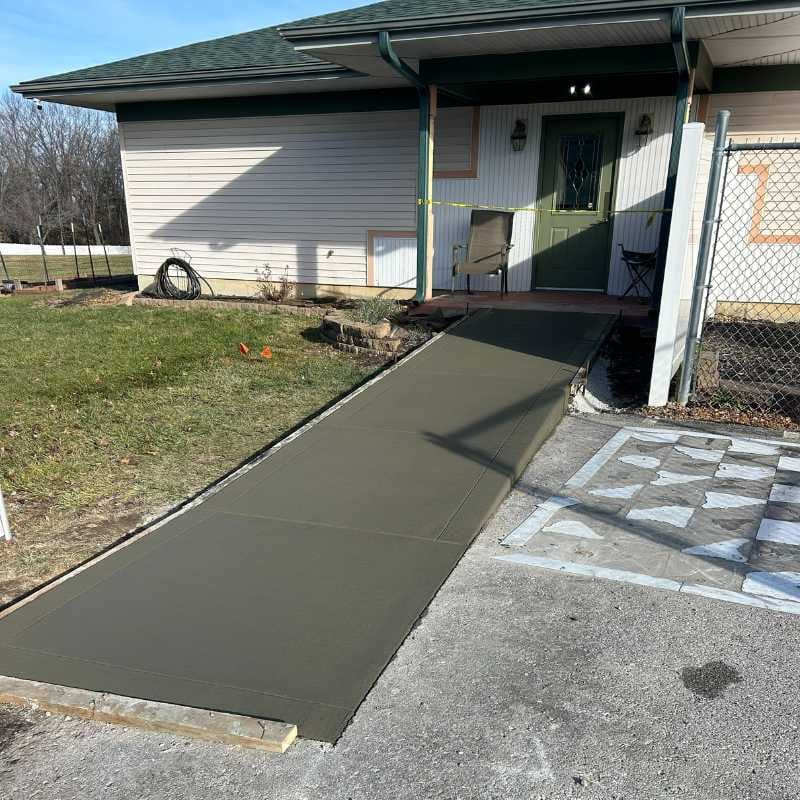
Sidewalks and walkways
Concrete Walkways, Sidewalks and Steps Built to Last
Concrete sidewalks around St. Louis homes are rarely just a slab. They are the front walk guests step onto first, the side path that carries water as well as feet, and the steps where a bad pour becomes a trip hazard. We handle concrete walkway installation in St. Charles and across Greater St. Louis for front walks, side walkways, paths, steps, landings and small flatwork. Bryan Fennell explains the plan before the crew starts.
01
Concrete sidewalks in St. Louis: what we install and replace
Walks and paths take less weight than a driveway, but they take more daily wear than most people expect. They carry foot traffic in every season, take de-icing salts and shed rain toward the lawn, the house or the street, depending on how they were built. We install new walks and replace failed ones, and we match them to the driveway, patio and steps they connect. Where we find a base or drainage problem, we explain it before we price the fix.
- Front walks and entry paths
- Side walkways and paths through the yard
- Steps and landings, including at the front door
- Small flatwork, such as a pad for a utility area or a transition between surfaces
- Replacement of cracked, lifted or settled sections
- Safe transitions to driveways, patios and porches
02
Concrete walkway installation in St. Charles: front walks, side walks and paths
Brian & Michele N had us replace their driveway and front walkway and install a side walkway and a patio. They wrote: "Midwest Hardscapes did an excellent job in the replacement of our driveway and front walkway, plus the installation of a side walkway and patio! Bryan and his crew arrived as stated, dealt with the work at hand, and communicated with us as the work progressed."
Eric had a double driveway and a walking path done. His review: "The whole team was friendly and skilled. They were very considerate to my neighbors. The end product of a double driveway and walking path looks great. The whole team cleaned up the entire yard at the end of each day. Highly recommend!!!"
A walk is usually part of a larger picture. If the driveway and walk are both failing, doing them together keeps the finish, joints and levels consistent. See driveway replacement, and patio installation if a patio is part of the plan.
03
Steps and landings
Steps are where small mistakes cause falls. Every riser in a flight should be the same height, treads should be deep enough to stand on comfortably, and a landing at the door should be level enough that you are not stepping onto a slope while you open it. Uneven risers are the most common problem, because people stop looking at their feet after the first step. A handrail is worth discussing wherever steps are steep or the route is used by older family members.
We form and pour concrete steps and landings so they are consistent from the first riser to the last, with a surface that gives traction when it is wet. For a different look, natural stone steps are an option; the stone steps we build typically use 6 to 7 inch risers and 12 to 16 inch treads, and you can read more about them on our boulders and natural stone work page.
Paths, steps and landings
Walks that meet the house, the drive and the yard cleanly.
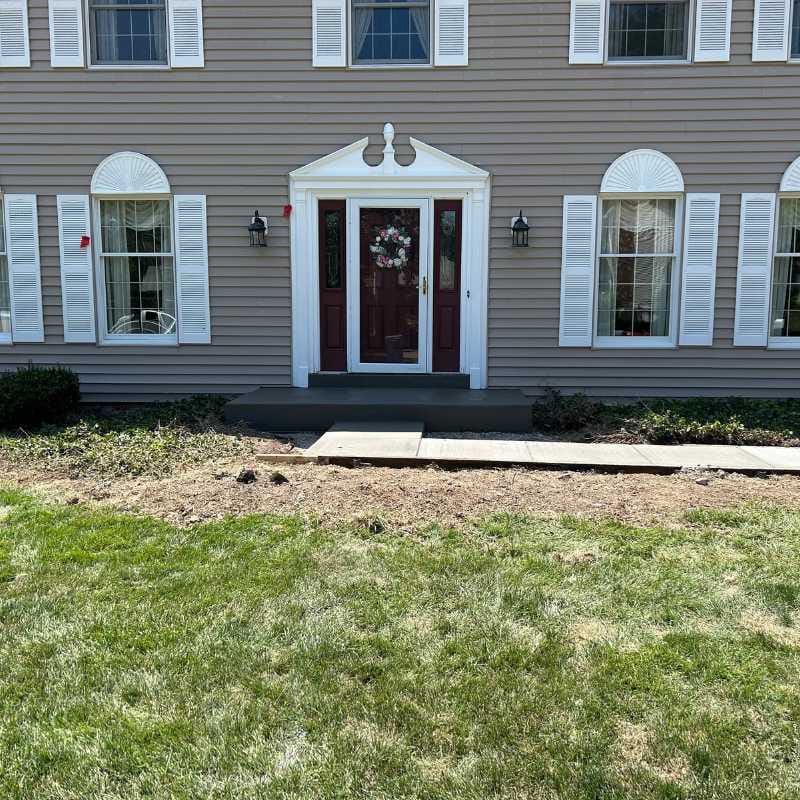
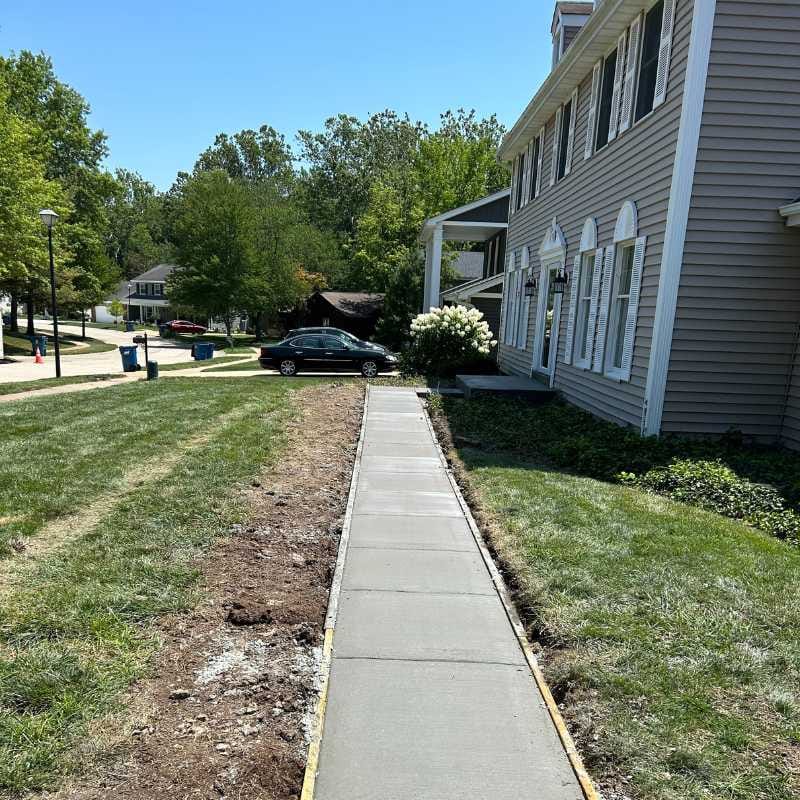
Front lead walk to colonial entry.
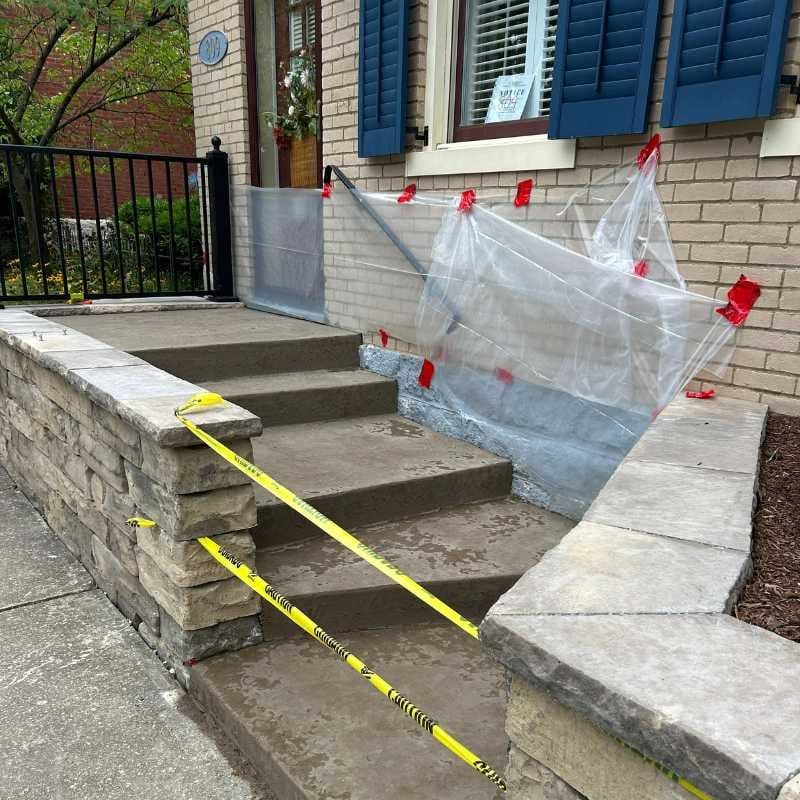
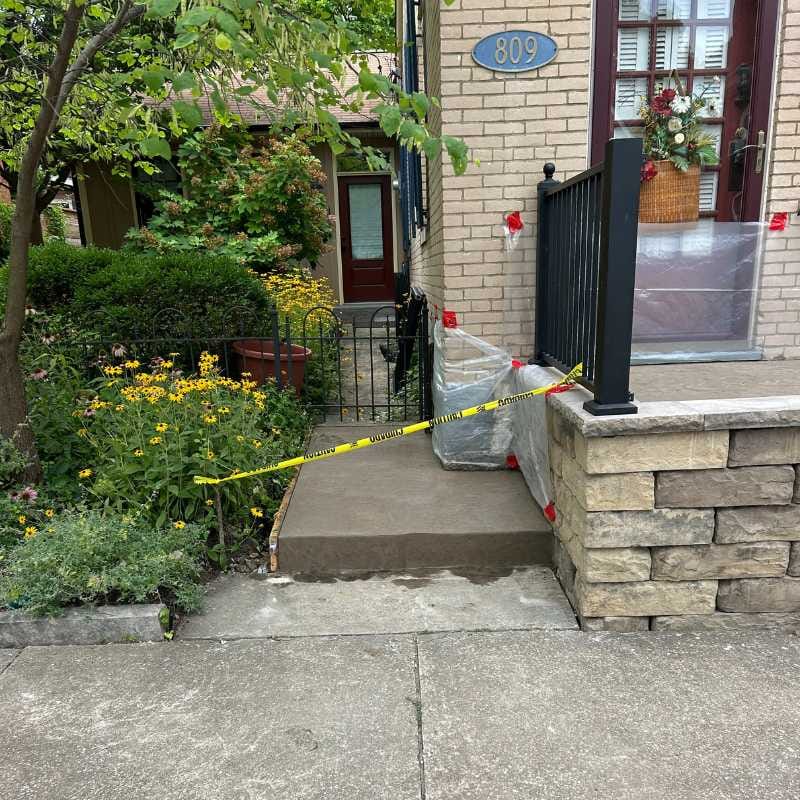
Fresh entry steps between stacked stone walls.
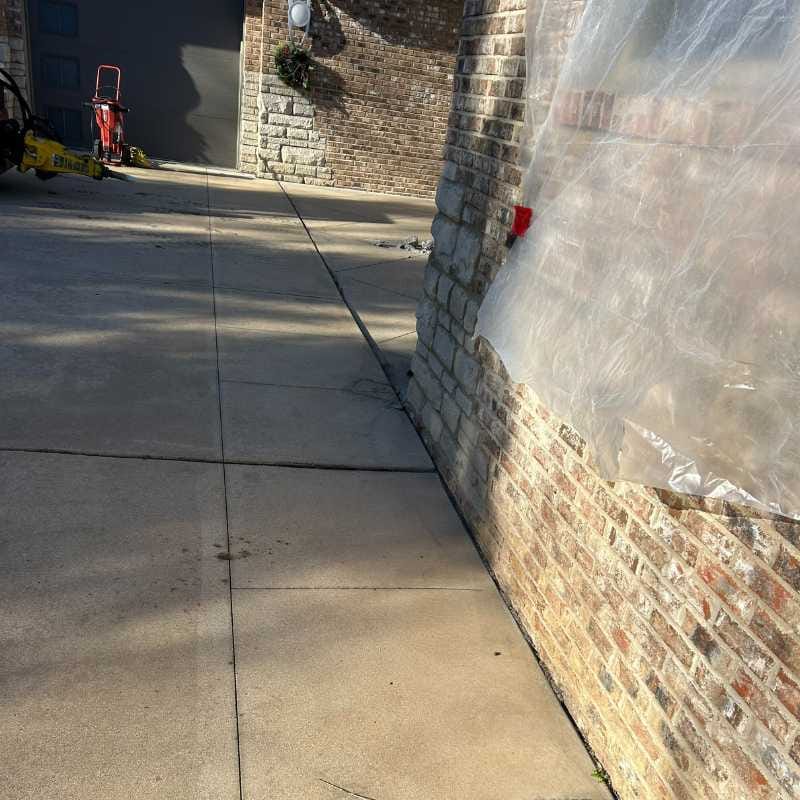
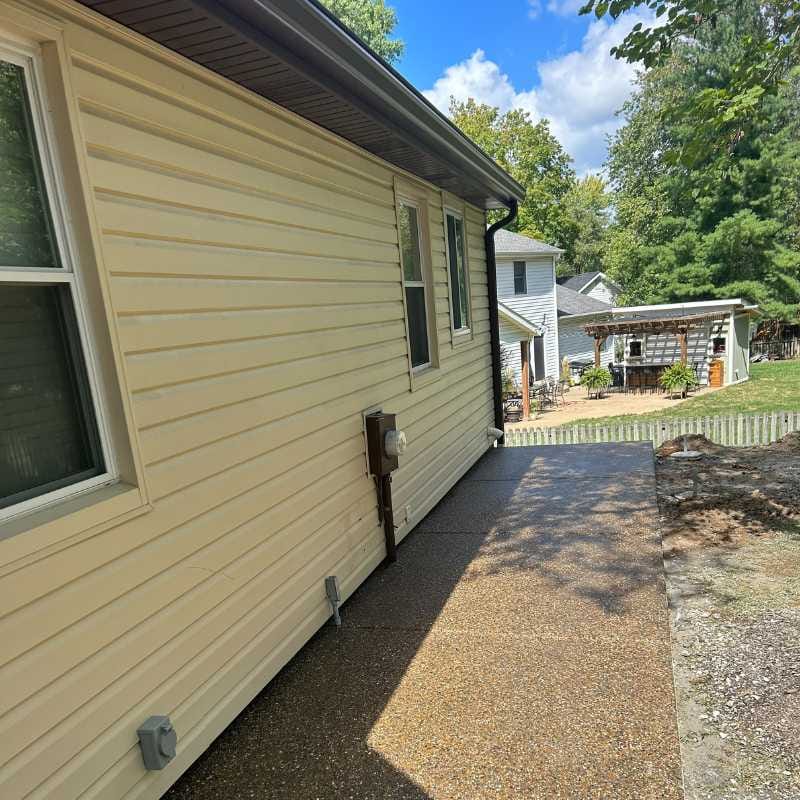
Side walkway along a brick wall.
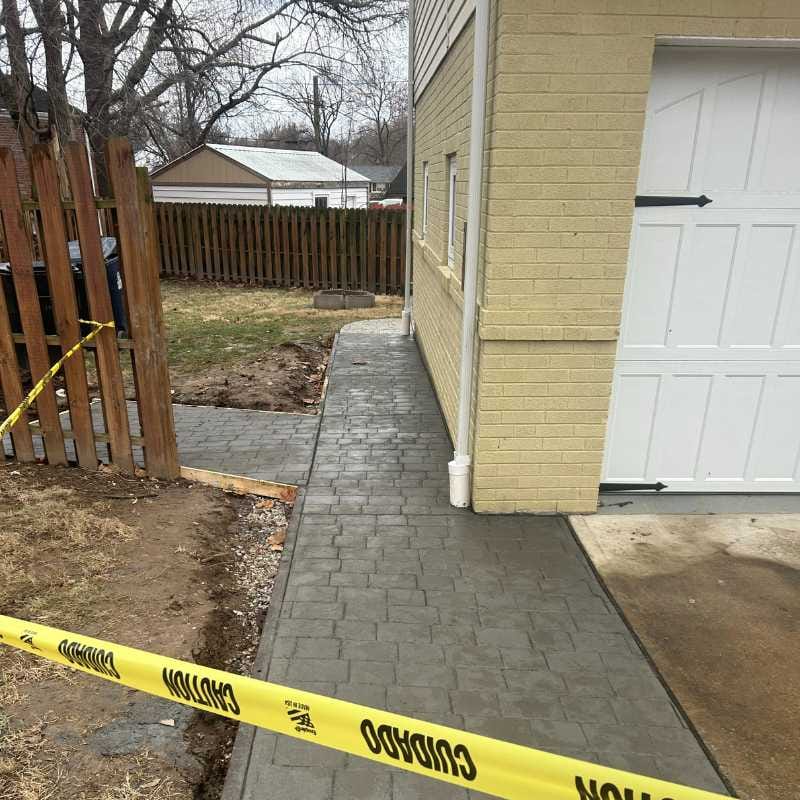
Gray stamped walkway beside a garage.
04
Safe transitions, slope and drainage
A walkway should shed water, not collect it. We pitch walks slightly across their width so water runs off the side, and we make sure that water is directed away from the foundation rather than toward it. Where a walk meets a driveway, a porch or a step, the transition should be flush and smooth enough to roll a cart over without catching a toe.
The 2010 ADA Standards set a clear width of at least 36 inches and a maximum cross slope of 2 percent for accessible routes. They mostly apply to public and commercial routes, but they are a useful reference for any walk that needs to work for strollers, wheelchairs, walkers and people carrying groceries. Tell us who needs to use the route and we will plan the width and slope around that. It is much easier to build a gentle, wide route at the start than to tear out a steep one later.
05
Base, reinforcement and joints: the part you never see
A sidewalk that cracks and lifts within a few winters usually failed from below. We typically build on compacted base rock (1-inch minus), because the base makes everything, and we pour at a consistent thickness. Driveways and patios are typically poured at 4 inches, and walks are often similar, though the right thickness depends on the use.
We typically use fiberglass reinforcement because it will not rust and expand inside the slab the way steel can, and we plan control joints so the concrete cracks along chosen lines instead of random ones. Properly built concrete can last for decades. What shortens that is water, a poor base, tree roots, salt and missing joints, which is why we spend our time on the parts that do not show. On a walk, attention to detail means checking levels and drainage before the first pour, not after.
06
Commercial sidewalks and accessible routes
Property managers have extra concerns: safe, accessible routes, tenant and customer disruption, scheduling and clear proposals for their records. We also install and repair walks, ramps and curb transitions on commercial properties, and we can prioritize urgent safety repairs ahead of items that can wait. See commercial concrete installation and repair for how we plan that work around your operations.
Commercial and residential work share the same fundamentals: a compacted base, planned joints, correct slope and a finish that grips when wet.
If you want concrete sidewalks in St. Louis or concrete walkway installation in St. Charles, call (636) 206-8577 or use the contact form. We will walk the route, explain what the walk, steps and base need, and give you a written proposal. Free quote, no pressure.
Straight answers
Questions about sidewalks and walkways
Do you install new concrete walkways in St. Charles?
Yes. We install front walks, side walkways and paths in St. Charles and across Greater St. Louis, and we replace walks that have cracked or lifted. We also match them to existing driveways, patios and steps so the finishes and levels work together.
Can you replace just the damaged part of a sidewalk?
Often, yes. Lifted slabs are trip hazards, and the cause matters: tree roots, settled base, water washing out the ground and freeze-thaw cycles all push concrete out of position. If the damage is limited, we will tell you honestly whether a section can be replaced instead of the whole walk, and whether the underlying cause needs to be fixed first, otherwise the new concrete may fail in the same way. Sometimes the answer is a small replacement and a drainage correction. Sometimes the whole walk has reached the end of its useful life and patching would only delay the job.
How thick should a concrete walkway be?
The right thickness depends on use. Driveways and patios are typically poured at a consistent 4 inches, and walks are often similar. Heavier use, a vehicle crossing the walk, or poor soil can call for more. We explain the choice for your property during the consultation.
Can you build concrete steps and landings?
Yes. We form and pour steps and landings with even risers, usable treads, a level landing and a traction finish. If you prefer a natural look, we also build stone steps, which are covered on our boulders and natural stone work page.
How do you keep a walkway from becoming slippery or uneven?
Finish and transitions. A broom finish gives traction when wet, steps need consistent riser heights, and the joints between slabs and other surfaces need to be flush. Good drainage also prevents standing water, which is where ice and algae show up first.
How long before I can walk on a new sidewalk?
We will tell you at the end of the pour, because it depends on weather and the mix. Installs often take 2 to 3 days of work depending on size. Concrete reaches its design strength around 28 days, so we recommend keeping heavy loads and de-icing products off the new surface in the early weeks.
Do you handle permits for work near the street?
Where a driveway apron in the city right-of-way needs a permit, we pull it. Rules for work in the right-of-way vary by city, and sidewalks near the street can be treated differently from walks on your own lot. If your walk, apron or curb touches public property, give us your address and we will check what applies before we start. For curbs, see our curb replacement service.
Do you do commercial sidewalks?
Yes. We install and repair commercial walks, ramps and curb transitions, with attention to accessible routes, scheduling and clear documentation for property managers. See our commercial concrete installation and repair page for more detail, or call us and describe the property.
What affects the cost of a walkway or sidewalk?
Whether the job is a homeowner's front walk or a retail frontage, we give free quotes. We review the site, explain the options and send a written proposal by email. We do not price a walk from a phone call alone, because these factors change the number: demolition and haul-off of the old concrete, access for equipment and for the concrete truck or pump, excavation and base preparation, reinforcement and joint layout, concrete volume and thickness, the finish (broom or decorative options), steps, landings and grading or drainage work, and permits, where they are needed, and other site conditions.
Keep reading
Related work
Where we do this work
Free estimate
Your project deserves a straight answer.
Tell us what's going on with your sidewalks and walkways. We'll look at it with you, explain the options, and email a clear written proposal. No sales pressure.
Craftsmen, not salespeople. A written proposal by email, no pressure to sign.