
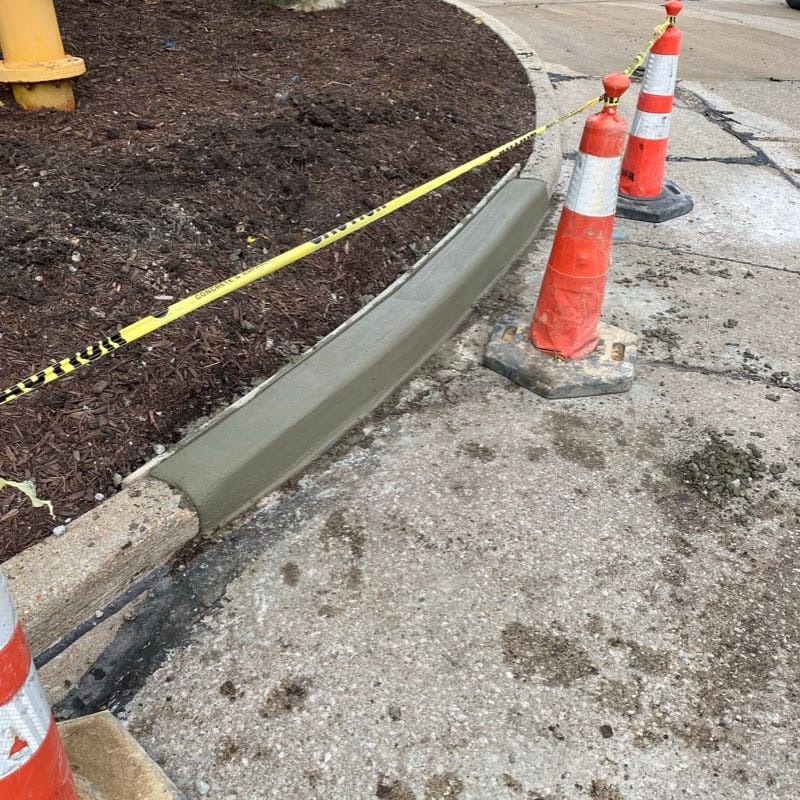
Curbs and aprons
Full-Depth Concrete Curb and Apron Replacement in St. Charles
Curb replacement in St. Charles should mean the whole curb, not a thin patch on top of a failing one. We replace residential concrete curbs and driveway aprons in St. Charles and across St. Charles County, taking out the damaged concrete to its full depth and rebuilding it on a prepared base. Bryan Fennell walks the curb with you first, and if yours only needs minor attention, we will tell you.
01
Curb replacement in St. Charles: what we do
We replace broken, crumbling and sunken concrete curbs along streets and driveways, and we rebuild the driveway apron where the driveway meets the street. Most calls come from homeowners with a single damaged stretch, and from HOA boards who need several sections done in the same neighborhood.
Curbs are easy to overlook until they fail, and then they affect more than looks. A broken curb lets water and soil wash out from under the street edge and the driveway apron, it can snag a mower or a tire, and it gets worse every winter. Fixing it while the damage is limited usually keeps the problem from spreading into the driveway and sidewalk beside it.
- Residential curb removal and full-depth replacement
- Driveway apron replacement, including permits where they are needed
- Short sections or longer runs along a street
- HOA and neighborhood curb projects
- Transitions to the driveway, sidewalks and nearby concrete
02
What a curb really is
A curb looks like a small ledge. It is more than that. Only about 6 inches of a curb typically shows above the pavement, and there is more below it, holding it in place and carrying the load of the street edge, mowers, snow plows and the occasional tire.
That hidden part is why curbs fail the way they do. Water gets in at cracks and joints, freezes and expands, and de-icing salts speed up the damage. When the base under a curb settles, the curb tilts, cracks open and water ponds along the gutter line. What you can't see matters most, and with a curb it really is below the surface.
03
Full-depth replacement versus the shortcut
Here is something worth knowing before you compare quotes. Some contractors only remove the top portion of a damaged curb, pin rebar into what is left, and pour a thin cap over it. It is faster, and from the street it can look fine for a while.
The problem is that the old curb is still underneath. If the damage, the settled base or the cracks reach below the cap, the cap inherits them. A thin layer attached to old concrete is also more likely to chip and break loose. Full-depth replacement removes the failed concrete all the way down, prepares the base, and pours a new curb that stands on its own. We think that is what you are paying for.
That is a general observation about a common shortcut, not a judgment of any one company. Whoever you hire, ask how deep they take the old concrete out, what the base will be, and how the new curb will tie into the existing street edge and driveway.
Reinforcement and joints matter too. We typically use fiberglass reinforcement because it will not rust and expand inside the concrete the way steel can, and we plan control joints so the new curb cracks, if it cracks at all, along a straight line you will barely notice.
Repair, replace or wait?
Repair or replace? Here is how we decide.
We look at why the concrete failed before we recommend anything.
| Surface | Often a repair | Often a replacement |
|---|---|---|
| Driveway | Surface wear or a few narrow cracks on a slab that is still sitting firmly and draining well. | Widespread cracking, settling or heaving, or water pooling because the base underneath has failed. |
| Concrete floor | Localized cracks or surface damage where the slab underneath is stable. | A floor that has settled or broken up in sections. Coatings such as epoxy are cosmetic and will not fix a failing slab. |
| Curb | Minor chips or edge damage that we can patch cleanly. | Curbs broken along their length, such as from plow impacts, or sections that no longer hold their shape. |
Homes
Residential curbs and driveway aprons, where the drive meets the street and the city right-of-way.
Commercial lots
Parking lot curbs broken by plows and heavy vehicles, replaced full depth on a proper base.
Parking lot curb repair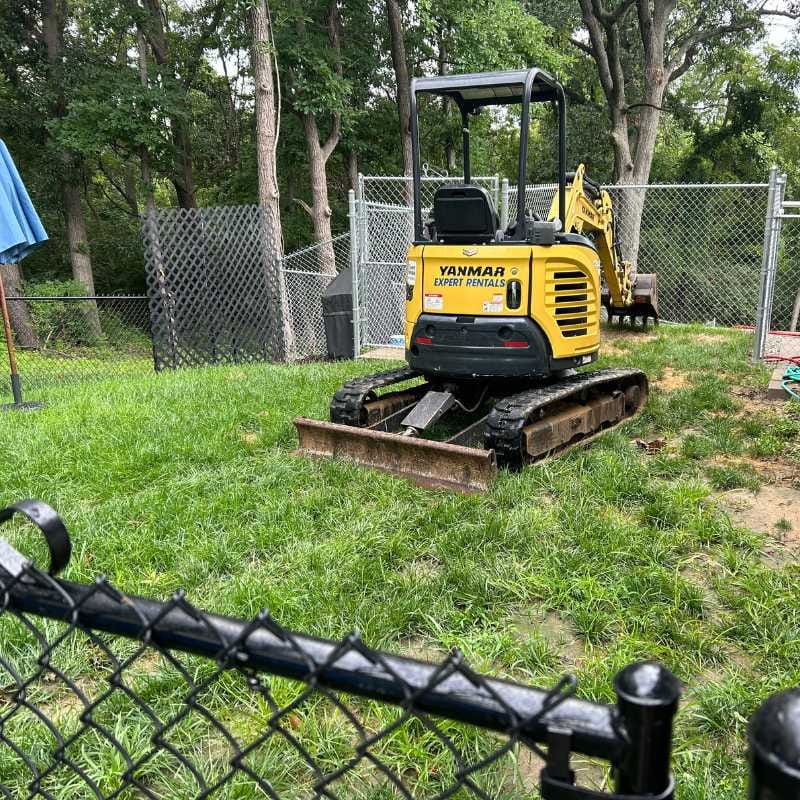
04
When a curb needs replacing, and when it does not
Not every curb needs to come out. A hairline crack that has not moved, or a small chip on an otherwise solid curb, may only need attention. If your curbs just need minor attention, we will tell you. If repair makes more sense than replacement, we say so.
Replacement is the right call when the curb is crumbling, when sections have sunk or tipped so water collects against them, when cracks run through the full height, or when pieces have broken away. These are the common causes we see:
- Freeze-thaw cycles and de-icing salts
- Settling from a poorly compacted or washed-out base
- Vehicle and equipment impact at the edge
- Poor drainage that keeps the curb wet
- Original concrete poured without enough base preparation
05
Drainage, slope and how water leaves the street edge
A curb is also a channel. It guides runoff along the gutter to the storm inlet, so its slope and surface matter as much as its strength. A curb that sits too high or too low, or a gutter line that holds water, will freeze into ice in winter and keep the concrete wet in summer.
We set the grade so water keeps moving along the gutter and away from your driveway, and we match the new curb to the existing street edge and the surrounding concrete. Where the work touches a curb ramp or a sidewalk crossing, the 2010 ADA Standards set the slope and width that route needs, and we plan around them.
In winter, a well-graded gutter line is also safer. Water that drains away does not freeze into a patch of ice at the foot of your driveway, and that is a small detail with a big effect on mornings in January.
06
HOA and neighborhood curb projects
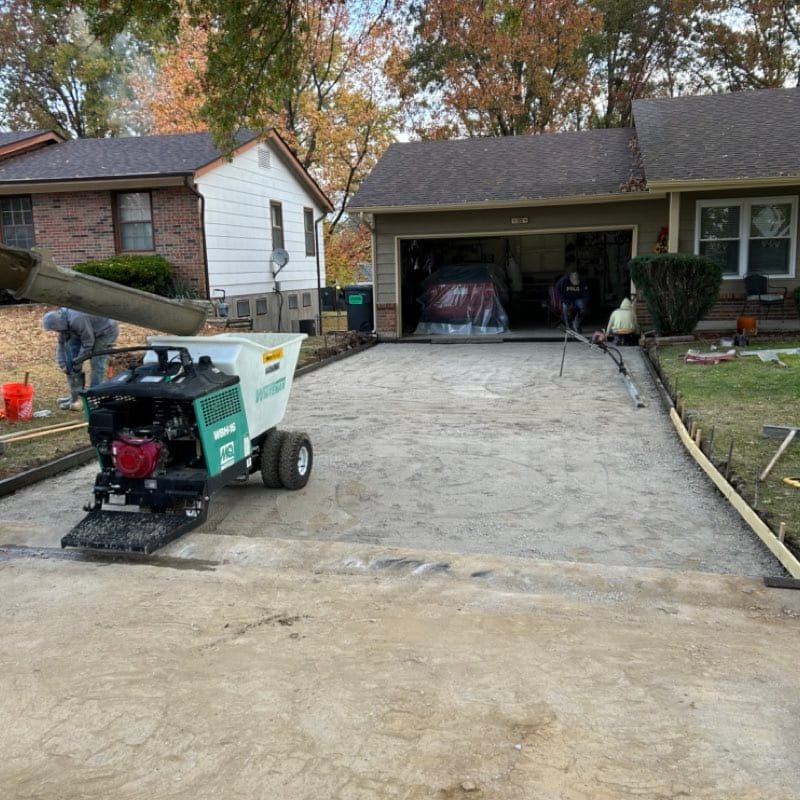
Curb work across a neighborhood takes some coordination. Crews need clear access, residents need to know when driveways will be blocked, and lawns and landscaping next to the curb need protection. Customers tell us that our crews show up when promised, clean up each day and are considerate of neighbors, and that is the standard we hold ourselves to on shared streets.
For an HOA, we can walk the community with a board member, review which sections need replacement and which only need attention, and give a written proposal you can share with your board. You are free to compare other quotes. If the project includes a commercial lot, our commercial parking lot curb repair page covers that side of the work.
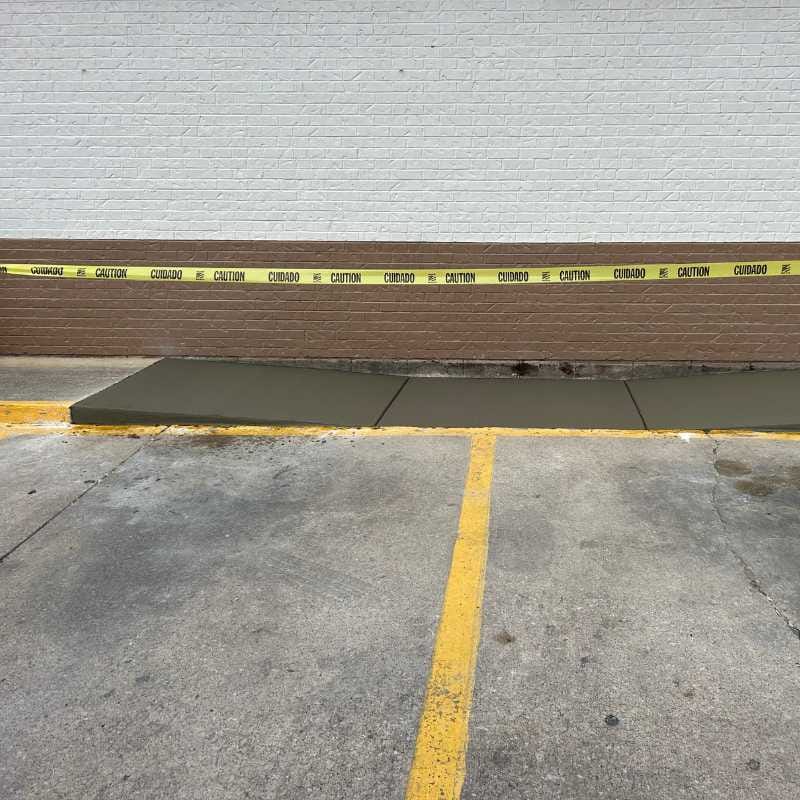
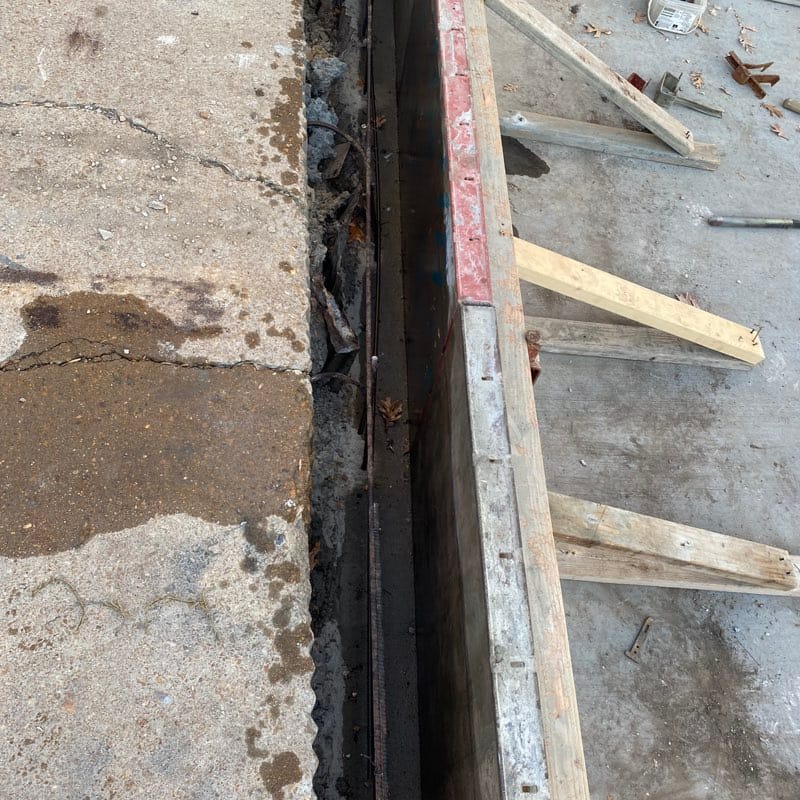
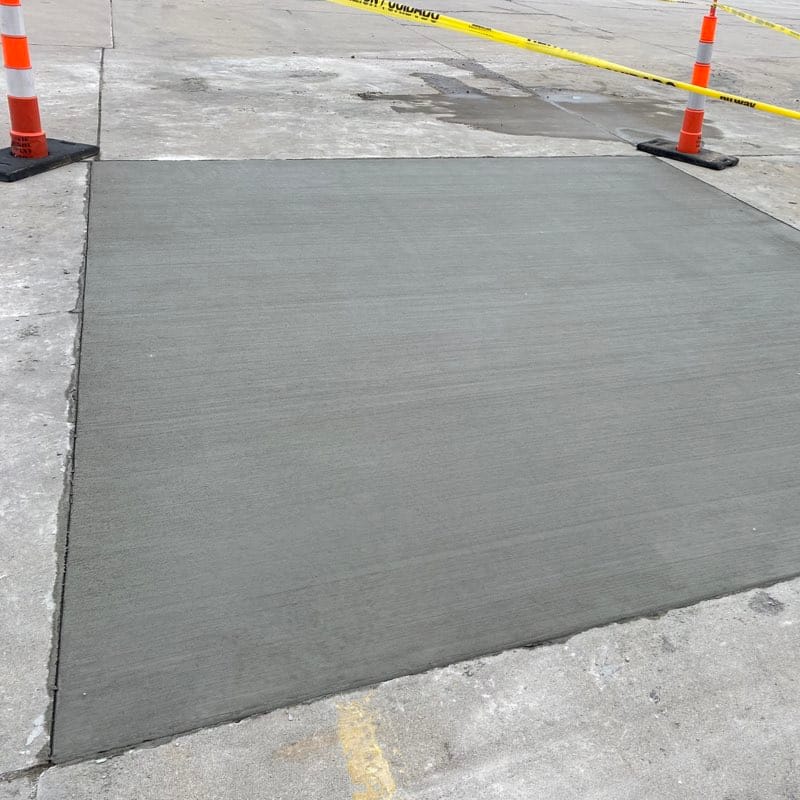
If you need curb replacement in St. Charles, request a free quote or call (636) 206-8577. We will walk the curb, show you where the damage really ends, and give you a written proposal for a full-depth replacement or a smaller fix, whichever the curb needs. Free quote, no pressure.
Straight answers
Questions about curb replacement
What is the difference between full-depth curb replacement and a cap?
Full-depth replacement removes the failed curb all the way down and pours a new one on a prepared base. A cap removes only the top portion, pins rebar to what is left and pours a thin layer over it. A cap can hide problems that sit lower, so we recommend full-depth replacement when the damage goes deeper.
Can you replace just one section of curb?
Yes. We can replace a single damaged section or a longer run, and we match the new concrete to the existing curb and the surrounding surfaces. If the neighboring sections are close to failing too, we will say so, so you can decide whether to do them together.
Do I need a permit to replace my driveway apron?
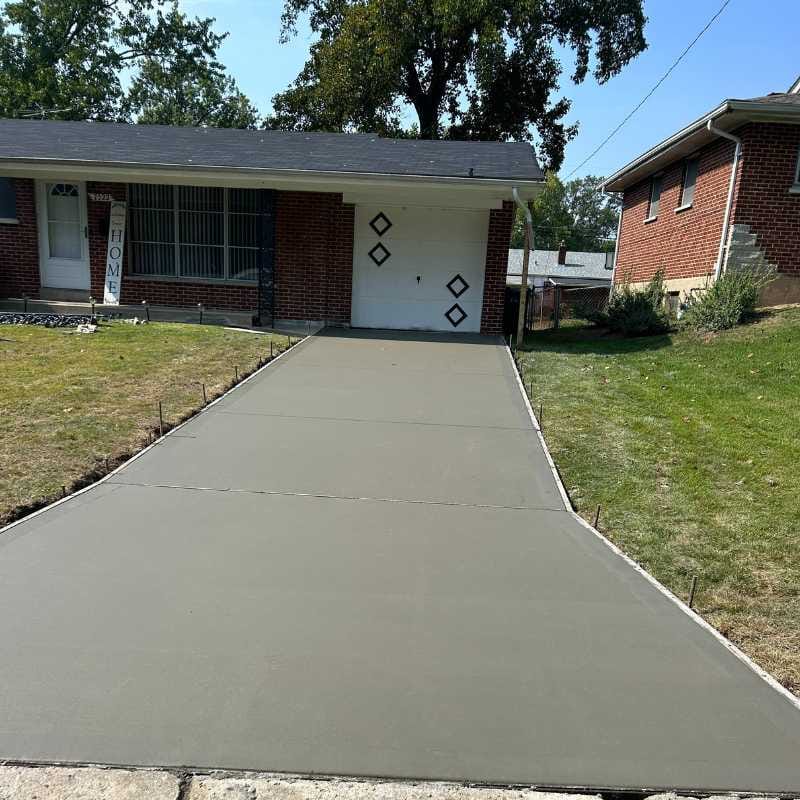
Often. The apron is the section of driveway between the sidewalk or curb and the street, and in many places it sits in the city right-of-way, where work may need a permit. Where a driveway apron needs a permit, we pull it. Rules differ from one city to the next, so give us your address and we will sort out what applies. Curbs and aprons are best handled together with the driveway when they are all failing at once; see driveway replacement. If the adjoining walk is cracked or lifted, we can address it in the same visit; see sidewalks and walkways.
Do you work with HOAs?
Yes. We replace curbs and aprons for homeowners and for HOA neighborhoods. We can walk the community with a board member, tell you which sections need replacement, and put the findings in a written proposal for your board. Getting other quotes is encouraged.
Why is my curb cracking and crumbling?
Usually water and what is under the curb. Water enters cracks, freezes and expands, and de-icing salts speed up surface damage. If the base settles or was never properly compacted, the curb tilts and cracks open. Impact from vehicles and equipment adds to it.
How long does curb replacement take?
A short stretch of curb or a single apron is often a matter of 2 to 3 days of work, including removal, base preparation, forming and the pour. Larger runs take longer. Concrete reaches its design strength around 28 days, and we tell you when vehicles can use the new work.
Will you damage my lawn and landscaping?
We take care around lawns, gardens and neighboring property. Customers have told us our crews were careful around gardens and considerate of neighbors, and that the site was cleaned up at the end of each day. Tell us about plantings, irrigation or sprinkler heads near the curb during the first visit.
Do you replace commercial parking lot curbs?
Yes. Commercial curbs and parking lot curb repair are a separate service, with different needs such as traffic, scheduling and accessible routes. See our commercial parking lot curb repair page, or call us and we will point you to the right starting point.
What affects the cost of curb replacement?
We give free quotes and do not price a curb from a description alone. The factors that shape the number are demolition and haul-off of the old curb, the length of curb and how many separate sections, access for equipment and concrete trucks, excavation, base preparation and reinforcement, concrete volume and the depth of the new curb, matching the existing profile and finish, grading and drainage at the gutter line, and permits, where they are needed, and other site conditions.
Keep reading
Related work
Where we do this work
Free estimate
Your project deserves a straight answer.
Tell us what's going on with your curb replacement. We'll look at it with you, explain the options, and email a clear written proposal. No sales pressure.
Craftsmen, not salespeople. A written proposal by email, no pressure to sign.