
Sunset Hills, St. Louis County
Concrete Contractor in Sunset Hills, MO: Built for Slopes and Runoff
A concrete contractor in Sunset Hills, MO should talk about water before concrete. The city's own plans say many homes were built without detention or storm sewers, on steep, cherty slopes with very little topsoil, over rock suited to springs and sinkholes. Midwest Hardscapes, based in St. Charles, builds driveways, patios, walls and stonework here with grading, base and runoff planned first, because that is what decides whether a new slab lasts.
- 4.8 ★31 Google reviews
- 33 YearsOf hands-on concrete experience
- A+BBB rated, accredited since 2023
- FreeNo-pressure estimates
01
Concrete Contractor in Sunset Hills, MO: Driveways, Patios and Walls on Slopes
Sunset Hills is a hilly, mature suburb, and the ground decides most of what we do here. The city's own plans describe steep, cherty slopes with very little topsoil, and many homes built before detention and storm sewers were part of the picture. With a median home built in 1979, a lot of driveways and patios have spent decades shedding water downhill, and the cracks usually show at the low end.
Midwest Hardscapes replaces driveways and patios, builds retaining walls with drainage behind them, and places boulders and natural stone that help step a grade and slow runoff. On every Sunset Hills job we plan the water path and the base first, then the slab.
Concrete services available in Sunset Hills
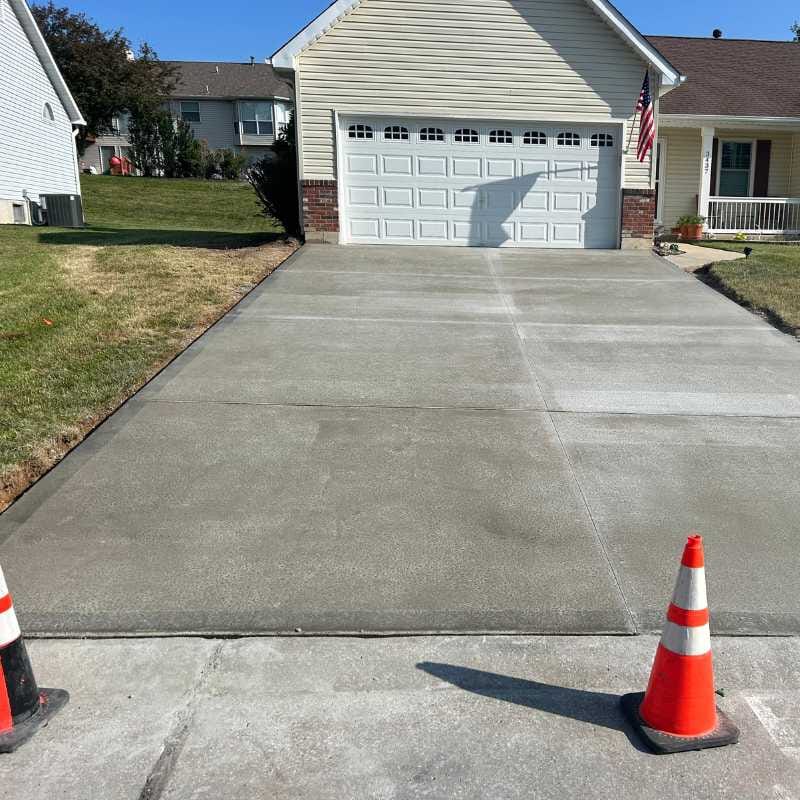
- Driveway ReplacementDriveway replacement planning in Sunset Hills focuses on base depth, control joints, drainage and the garage approach.
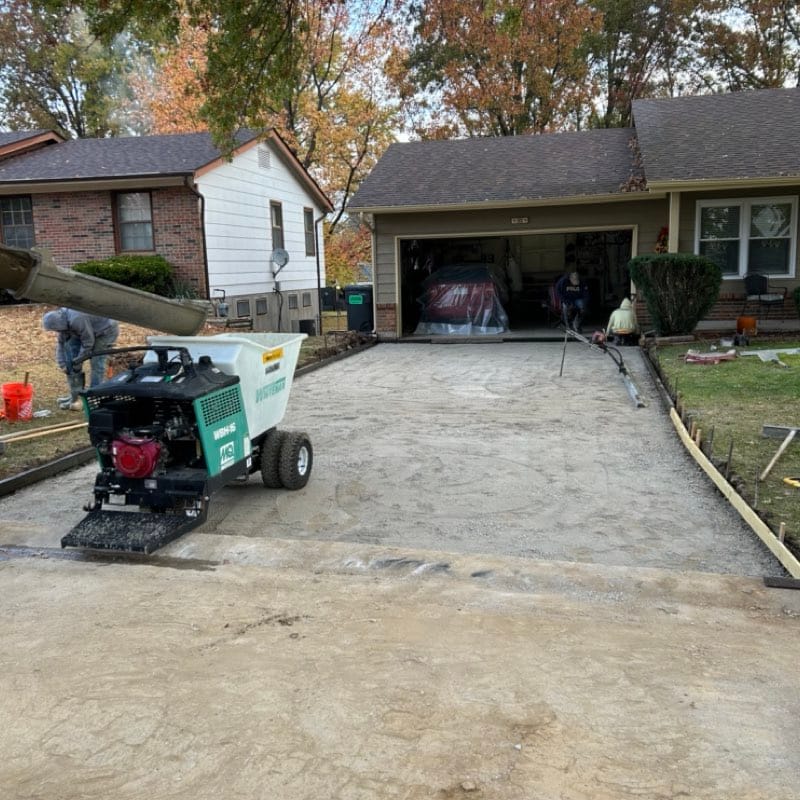
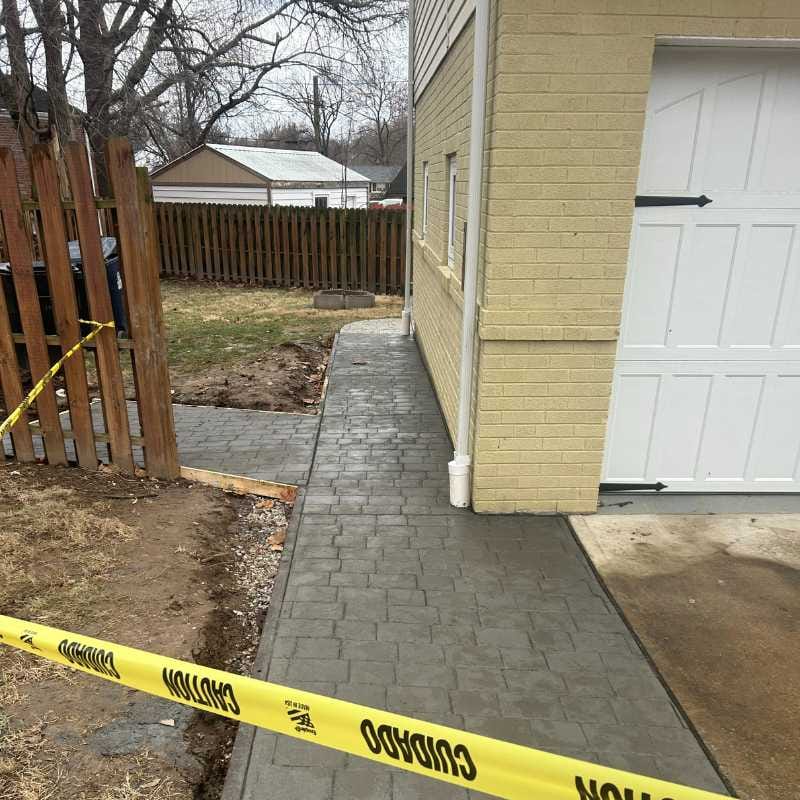
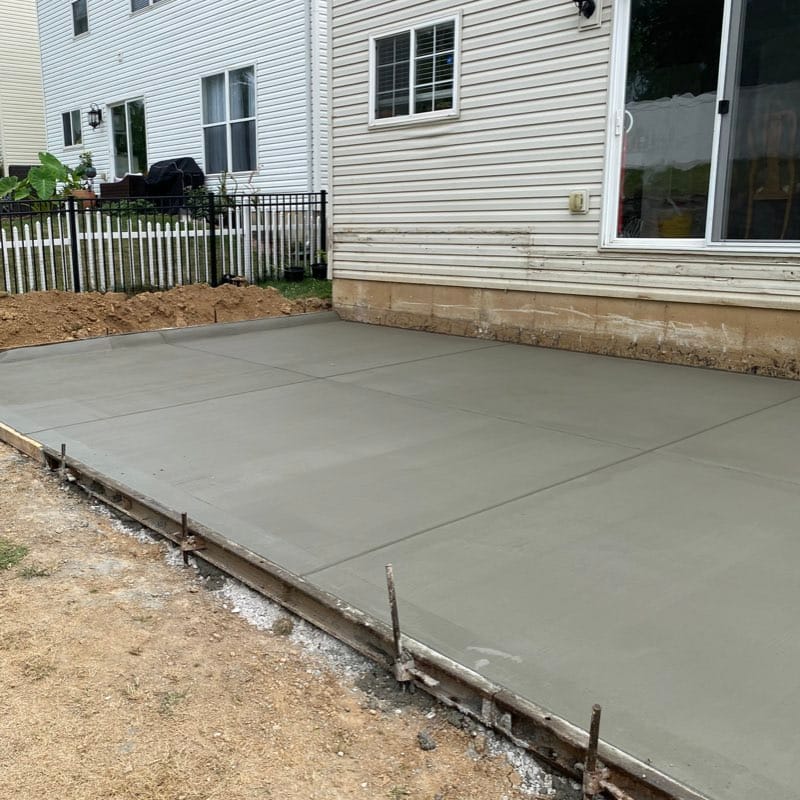
- Concrete Patio ReplacementConcrete patios in Sunset Hills are laid out around seating, steps, grills, doors and water movement.
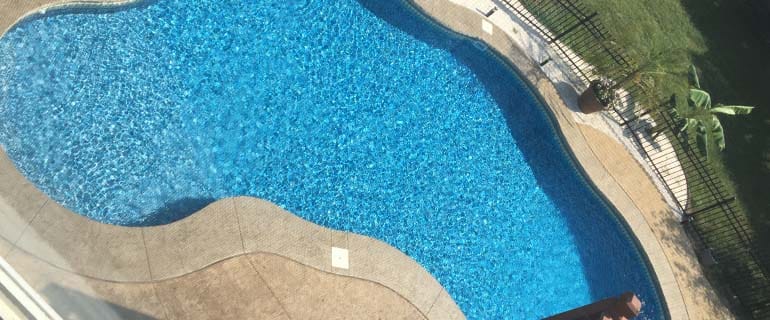
- Pool DecksPool decks in Sunset Hills need traction, comfortable edges, drainage and a finish that handles summer traffic.
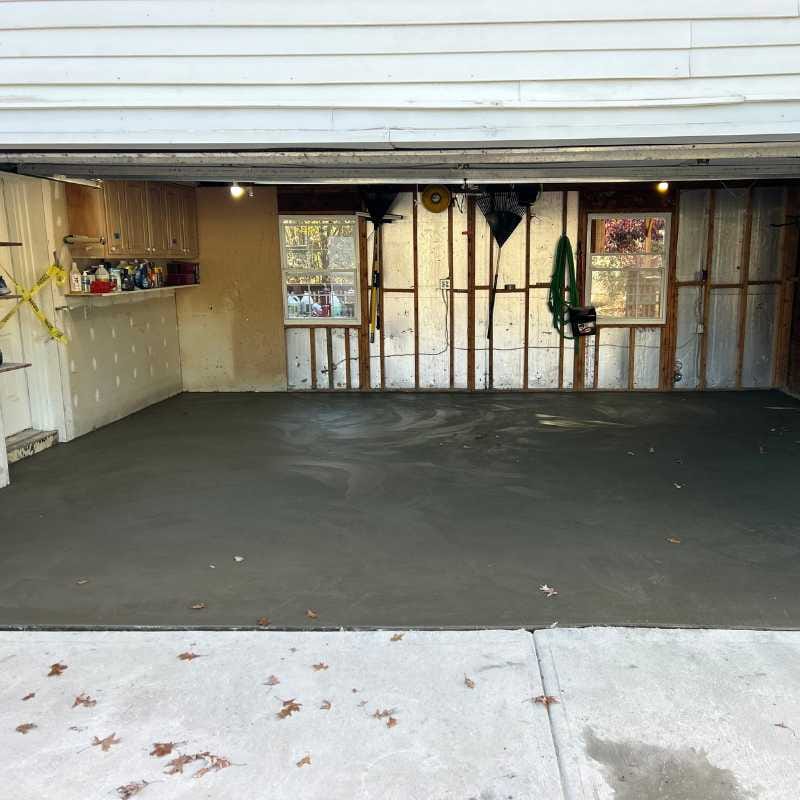
- Concrete FloorsConcrete floors and slabs in Sunset Hills are planned around use, load, control joints and long-term durability.
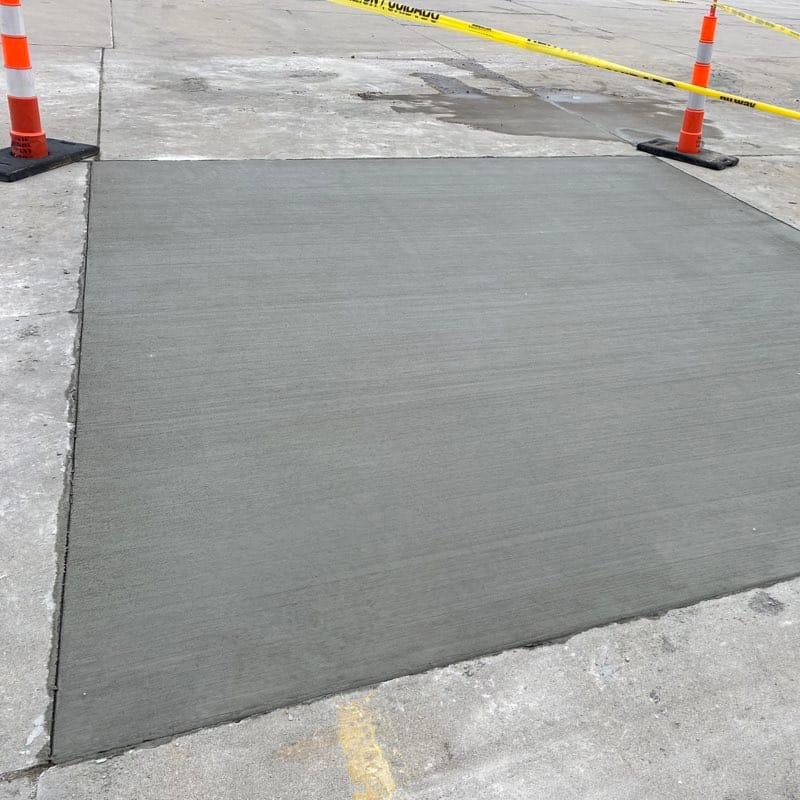
- Curb ReplacementCurb replacement in Sunset Hills supports cleaner parking areas, safer transitions and better water movement.
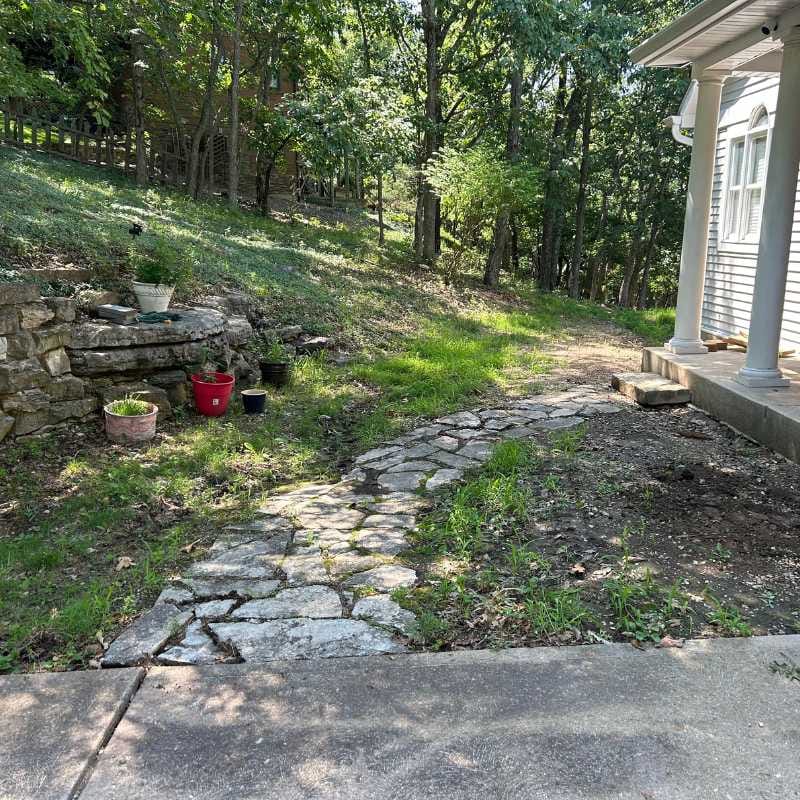
- Outdoor LivingHardscape design in Sunset Hills can connect patios, seating walls, steps, fire features and landscape edges into one usable space.
02
Thin Topsoil, Cherty Slopes and Why Base Matters
The city's plan says the steeper slopes have a cherty rock material that is easily eroded and covered with very little topsoil. Chert is hard, gravelly stone; it does not make a smooth, uniform subgrade by itself.
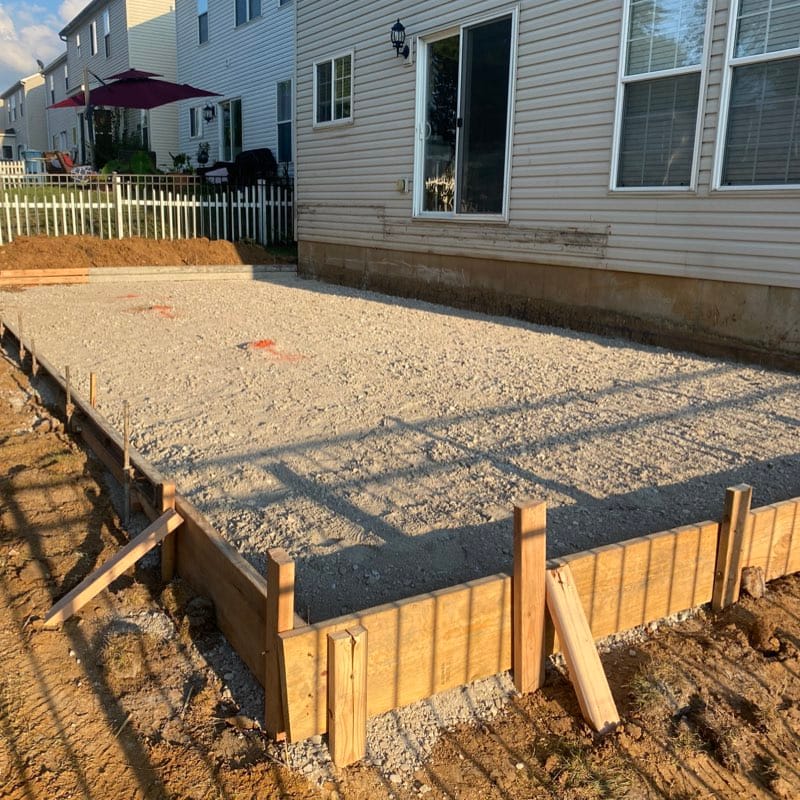
That is why we compact 1-inch minus base rock under slabs and check the subgrade before it is covered. What you can't see matters most. On slopes, erosion under a slab can undermine edges over time, so drainage at the edges and behind walls is part of our retaining walls build.
03
Reading the Slope: Yards and Driveways on a Hill
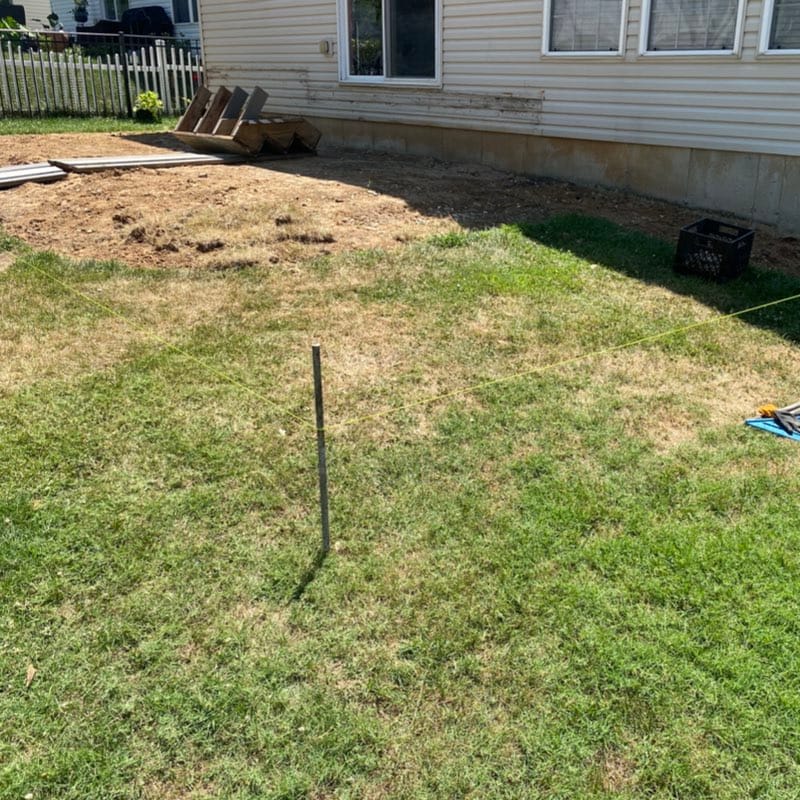
Before any estimate, walk the yard in the rain, or look at photos from one. See where downspouts empty, which way the lawn tilts, and where water sits afterward. Those answers matter more than the size of the patio.
On a slope, we plan a slab to shed water to the side or away from the house, add drainage behind a wall, and keep the base rock compacted and well-drained so that freeze-thaw cycles have less water to work with. We will say plainly when a spot is not a good place for a slab.
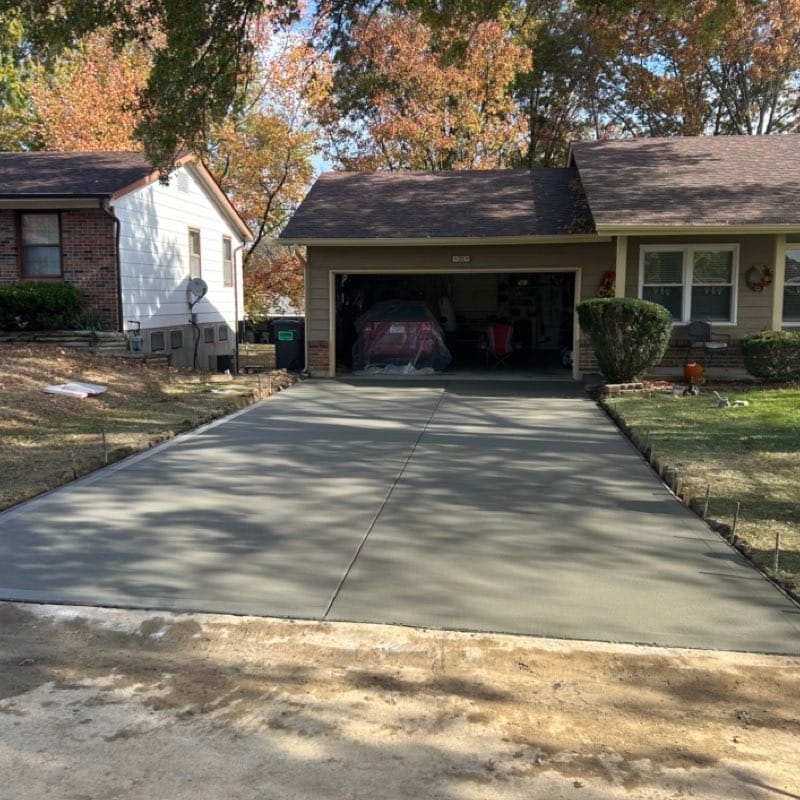
A steep driveway has its own problems: water runs down it, collects at the bottom and finds the garage door or the street. A driveway that needs replacing often has cracking at the low end where water and ice have worked on it for years.
We look at the apron and the lowest point first, plan control joints so cracks follow a line we chose, and set the slope so that runoff leaves the slab. Our driveway replacement page lays out the base, thickness and reinforcement we typically use.
04
Springs, Sinkholes and Eleven Small Creeks
The city plan says the underlying rock is ideal for springs, caves, sink holes and underground creeks, and that water pours into creeks from spots low on hills fed by sinkholes further up. It counts about eleven small creeks and tributaries, many spring-fed, with flat bottom-land near the Meramec River, which the city drains toward.
We cannot see a sinkhole from the surface, and we will not say your lot has one. What we do: look for soft ground, low spots and spring seeps at the walkthrough, and plan around them. If something looks like a ground problem beyond concrete, we point you to the right specialist rather than pour over it.
Tell us about any spring seeps, wet patches that never dry, or low spots where water stands. Those clues help us decide where drainage, a thicker base or a different layout is worth the effort.
05
Stonework That Works With Runoff
On a hillside lot, natural stone and boulders can do real work: slowing water, stepping a grade and finishing a wall edge. They also look right in a yard with mature trees. Our boulders and natural stone work page describes what we place and how.
A boulder bed does not replace drainage; it works beside it. We plan the water path first and then choose where stone belongs.
If you are comparing a concrete contractor in Sunset Hills, MO, ask each one where the water will go. Call (636) 206-8577 or request a free estimate, and Bryan or the crew lead will assess your site, send a written proposal and leave the decision to you.
Most asked for in Sunset Hills
Want a decorative finish? See our stamped concrete work.
Installation process
A cleaner way to replace concrete in Sunset Hills
01
Assess
Inspect the failed surface, drainage, access and use, and whether repair or replacement is the honest recommendation.
02
Remove
Take out the failed concrete and expose the conditions that caused the original cracking, heaving or settling.
03
Prepare
Build the compacted base, set forms, plan the slope and place reinforcement before the concrete arrives.
04
Pour
Place a consistent thickness, finish the surface, cut clean control joints and keep the site clean.
05
Protect
Review curing, sealing, traffic timing and maintenance so the new surface gets the best start.
Low-bid installation
Less expensive up front, but a shallow base, poor grading and weak reinforcement can force early repairs or full replacement.
Built to last
Proper base preparation, reinforcement, consistent thickness and drainage planning cost more to do correctly, but protect the surface for decades. See what drives concrete costs.
Sunset Hills questions
What Sunset Hills property owners ask us
Nearby areas we serve
Midwest Hardscapes works out of its shop at 4025 Old Hwy 94 S in St. Charles. See all of our St. Louis concrete and hardscape work.
Do I need a permit to replace a driveway apron in Sunset Hills?
The city's FAQ says driveway aprons are the homeowner's responsibility, and the city does not inspect driveway apron construction or repair, but an excavation permit is required for the work. We pull the apron permit where one is needed. Because the city does not inspect aprons, the quality of the base and thickness falls to your contractor, so we build it like it will be inspected anyway, because every job is a reputation builder. Confirm the current requirement with the city for your address.
Why does drainage matter so much here?
Sunset Hills' Stormwater Master Plan says that when many houses were built, detention and storm sewers were not included, and that this is causing issues around the city where stormwater has nowhere to drain. For a homeowner it means one thing: where your concrete sends water matters. A patio that drains toward a neighbor, or a driveway that dumps into a low yard, is a problem on day one. We set grade so water leaves the slab and the house, and we tell you honestly if a spot has no good place for it to go.
Is my lot on a sinkhole?
We cannot tell from a photo, and we do not diagnose ground conditions. The city says the underlying rock is suited to springs, caves and sinkholes. We watch for soft ground and seeps during assessment and point you to a specialist if something is beyond our scope.
Is a permit needed for general driveway maintenance?
The city's right-of-way permit form says a permit is not required for general driveway maintenance without excavation. Replacement that digs into the right-of-way is different, and apron work needs an excavation permit. If you are unsure which describes your job, ask the city and tell us.
Which ZIP codes cover Sunset Hills?
Mostly 63127 and 63128, with a small part in 63122, according to Census ZCTA data. If a form or permit application asks for your ZIP, use the one on your mailing address. The city also has a spread of small neighborhoods, so it helps to give the street name when you contact us.
Can you build a retaining wall on a steep yard?
We build them, and drainage behind the wall is the key. We have not found a published Sunset Hills rule on wall permits, so ask the city whether your wall needs a permit. We will talk through height, drainage and what to do with runoff at the visit.
Free estimate
Concrete or hardscape work in Sunset Hills? Let's look at it together.
Tell us what you're planning or what needs fixing. We'll assess the work, explain the options, and provide a clear estimate without the sales pressure.
Craftsmen, not salespeople. A written proposal by email, no pressure to sign.