
The right concrete finish depends on where the slab sits and how you will use it. A driveway needs traction and easy upkeep, a pool deck needs grip and comfort under bare feet, and a patio can lean toward looks. This guide walks through the common concrete finishes, what each does well, and where each one gives you trouble.
Broom finish: the everyday workhorse
A broom finish is made by drawing a stiff broom across the slab after it is troweled and before it fully sets. The fine ridges give shoes and tires something to grip, which is why it is the standard choice for driveways, walkways and many patios.
The pros are simple. Traction is good when the surface is wet, it hides small scuffs and tire marks, and it is the most straightforward finish to repair or patch later. It also keeps cost in check, since it needs no extra materials or specialty labor beyond careful finishing.
The trade-off is looks. A broom finish is plain by design. It also holds a little more dirt in the ridges than a smooth surface, so an occasional rinse helps. Sealing is optional, but a sealer can make cleaning easier.
On a driveway, the broom pattern is usually run across the direction of travel so the ridges cross the line of a tire or foot. It is a small detail, and exactly the kind we think about on every pour.
Smooth or trowel finish
A smooth, hard-troweled finish is the choice for garage floors, basements, shop floors and some indoor areas. It cleans easily and looks tidy. Outdoors, it is a different story: when wet, a smooth slab can be slick, and in a St. Louis winter a thin film of ice on a smooth surface is a real hazard.
For that reason, smooth finishes suit interior floors and outdoor spots that stay dry. If you want a clean look outside, ask about a light broom or lightly textured finish instead. It keeps most of the tidy appearance and adds grip.
Stamped concrete: patterns and color
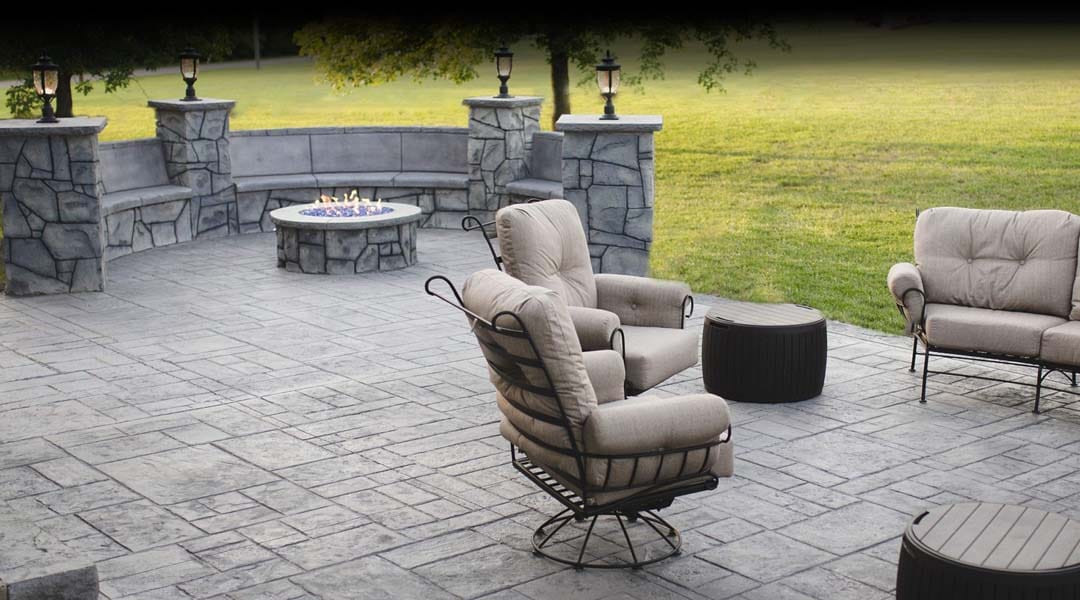
Stamped concrete is concrete textured and colored to imitate other materials. Big rubber mats are pressed into the surface while it is still workable, which can give the look of stone, brick, slate or wood plank. You can see how the process works on our stamped concrete page.
Color comes in two common ways. With integral color, the pigment is mixed through the concrete. With color hardener, a pigment powder is worked into the surface. A release powder, often in a contrasting shade, is then spread so the mats do not stick, and it leaves an antique, variegated look in the low spots of the pattern.
The Sika color charts on our stamped concrete page show the integral and antiquing release colors. Bring a photo of your house and any stone, brick or siding you want to match, and we can talk through combinations at the estimate.
Stamped concrete asks more of the installer than flatwork does, because timing, texture and color all have to come together before the concrete sets. It also asks more of you afterward. Plan to reseal every 1 to 3 years, depending on sun, traffic and the sealer; reseal when water stops beading.
Traction deserves a mention. A deeply textured pattern grips better than a smooth one, but a glossy sealer can turn slick when wet. Ask about a slip-resistant additive in the sealer for pool decks and steps.
- Good for: patios, entries, walkways and pool surrounds where looks matter.
- Watch for: sealer upkeep, and surface heat on dark colors in full sun.
- Cost drivers: pattern complexity, number of colors, edge details and slab area.
Exposed aggregate: an option to ask about
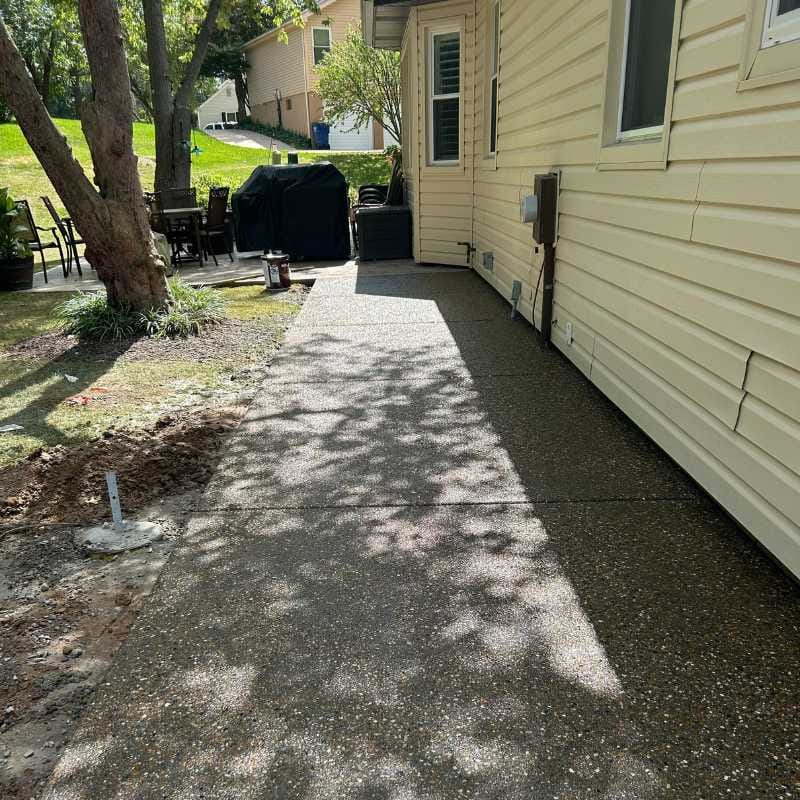
Exposed aggregate removes the thin top layer of cement paste so the small stones in the mix show through. The result is a pebbled, natural-looking surface with excellent grip, which is why it has long been used around pools and on walkways.
We do not present it as a specialty of ours. If you like the look, bring it up at the estimate and we will tell you honestly whether it suits your project and how it would affect the schedule and cost. Keep in mind the stones can feel rough underfoot and snow shovels can catch the edges.
Which concrete finish works best where
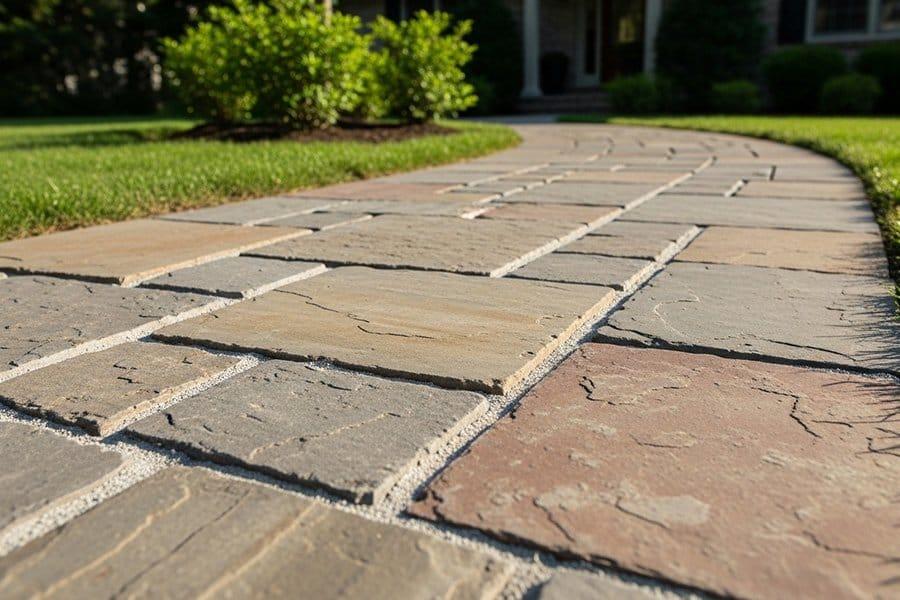
Driveways: a broom finish is the practical default. It handles tires, salt and snow shovels well. Pool decks: you want traction and a surface that does not get uncomfortably hot, so a broom finish, light texture or a cooler topping is worth considering. Our pool concrete page covers decks and coping. Patios: here the choice is open. Broom for a clean, simple look, stamped for pattern and color. Walks and steps: broom, always, for grip.
Whatever you pick, the finish is only the top inch of the story. The slab below it, meaning the base, the reinforcement and the drainage, decides whether it still looks good in ten years.
One more tip: think about the whole yard, not one slab. A broom-finished driveway beside a stamped patio is a common pairing, because each finish does the job it is best at.
| Finish | Traction | Upkeep | Best for |
|---|---|---|---|
| Broom | Good | Low | Driveways, walks, patios |
| Smooth or trowel | Lower when wet | Low | Floors, dry interior spaces |
| Stamped | Depends on texture and sealer | Reseal every 1 to 3 years | Patios, entries, pool surrounds |
| Exposed aggregate | High | Moderate | Pool areas, walks (ask first) |
Sealing, heat and maintenance
Sealers protect the surface from moisture, stains and de-icing salts. How often you reseal depends on the finish and the sun and weather it sees. Stamped surfaces need the most attention. Broom and smooth finishes can go longer.
Heat is the other practical point. Dark concrete in direct sun gets hot, and a light color stays cooler. If bare feet will be on it, pick a lighter shade and ask us to show you samples in daylight, not just on a chart. For more on upkeep, see our guide to concrete maintenance in Missouri.
Salt and chemicals matter as well. Winter de-icers can dull or scale an unsealed surface, particularly in the first year. Rinse off residue in spring, and reseal when water stops beading on the surface. That is a simple test you can do yourself with a glass of water.
How we help you decide
At the estimate, Bryan looks at the site, asks how you will use the space and explains what each finish tends to do over time. Bring photos or ask about samples. If a simpler finish serves you better than a decorative one, we will say so. Craftsmen, not salespeople.
Finish is a decision you make once, so it is worth a few extra questions. Ask how the surface will feel wet, how it will look in five years, and what care it needs. The answers usually point to the right choice quickly.
Choosing a concrete finish is a balance between traction, comfort, upkeep and looks. If you are weighing options for a driveway, patio or pool deck, ask us to bring samples to the estimate and walk through them with you. We will tell you honestly which finish fits.
See real stamped patterns and the Sika color charts.Stamped concreteQuick answers
What is the most slip-resistant concrete finish?
A broom finish or exposed aggregate generally gives the most grip, with exposed aggregate usually the roughest underfoot. Smooth troweled concrete is the slickest when wet, and stamped concrete varies with its texture and sealer. For pool decks and steps, ask about a slip-resistant additive and test a sample wet before you decide.
Is stamped concrete harder to maintain than broom finish?
Yes, somewhat. Stamped concrete should be resealed every 1 to 3 years, depending on sun, traffic and the sealer; reseal when water stops beading. A broom finish can go longer between treatments. Both benefit from sealed joints, good drainage and sparing de-icer use in winter. Ask us what care your chosen finish needs.
Does stamped concrete get hot in the sun?
Dark stamped concrete can get quite hot in direct summer sun, and lighter colors stay cooler. If it will be a pool deck or a barefoot patio, choose a lighter color and view samples in daylight, not only on a chart. Shade and nearby landscaping help too.
Can any concrete finish be colored?
Many can. Integral color is mixed through the batch, and color hardener is worked into the surface, so both can be used on stamped work and some flatwork. Antiquing release adds depth to stamped patterns. Ask which color method suits your finish and your site, since results vary.
Does Midwest Hardscapes do exposed aggregate?
We do broom, smooth and stamped finishes as part of our regular work. Exposed aggregate is an option to ask about at the estimate. We would rather tell you honestly whether it fits your project than present it as a specialty, so bring it up and we will talk it through.
What finish should a driveway have?
A broom finish is the practical default for most driveways. It gives tires and shoes traction, hides minor marks and is easy to maintain. Stamped finishes work on driveways too, but they need regular sealing, so weigh the added upkeep before you decide.