
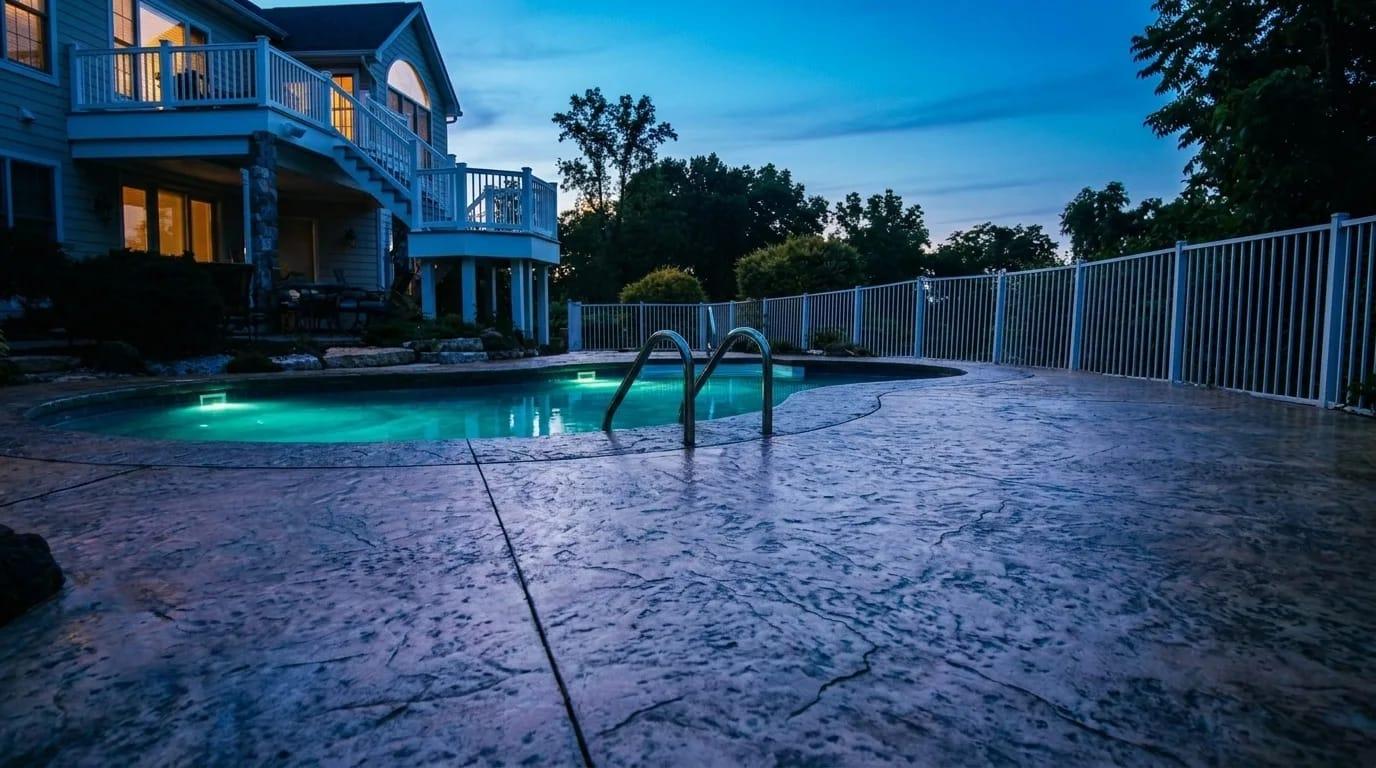
Good pool deck planning starts before any concrete is poured. The surface, the slope, the coping and the schedule with your pool contractor all shape how safe and comfortable the deck feels. This guide covers the decisions that matter most, from slip resistance to drainage.
Start with slip resistance
A pool deck is wet most of the time, and people walk on it barefoot. Traction comes first. A broom finish or a lightly textured surface gives better grip than a smooth one. Stamped patterns can work if the texture is moderate and the sealer is slip-resistant. Glossy sealers on a wet deck can turn slick.
Whatever you choose, ask to see a sample wet. Our guide to concrete finishes compares broom, stamped, exposed aggregate and smooth surfaces in more detail.
Steps and edges deserve extra thought. They are common slip points, so keep a clear, textured surface at every change in level.
Finally, think about maintenance. A sealed, well-drained deck is easier to keep clean, and pool chemicals, sunscreen and salt can stain or etch some surfaces. Ask what cleaning products are safe for the finish you pick.
Surface heat and comfort
A dark deck in full sun gets hot. Lighter colors stay cooler, and some toppings are made to be more comfortable under bare feet. Kool Deck is one; it appears in a review from Scott and Barb, who had their pool hardscape redone with coping, a concrete pad and Kool Deck. Ask us how a surface like that might fit your project.
Consider shade, too. A tree, pergola or umbrella can change how a deck feels by midday. Pick your color in daylight, not under a showroom light.
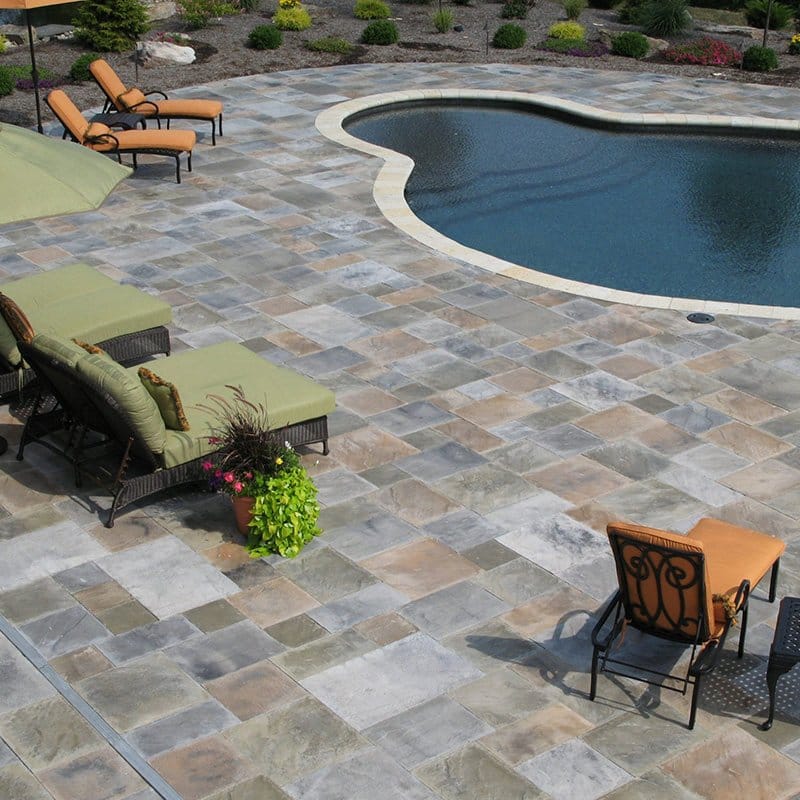
Drainage: falls away from the pool
Water should never sit on the deck or run back toward the pool. We build pool decks with 1 to 2 percent falls away from the pool, as our pool deck page describes. That is a gentle slope you can barely see but that moves water off the surface.
Good drainage protects against ice in winter, algae in summer and soil erosion beside the slab. Plan where the water goes after it leaves the deck: a lawn, a swale or a drain. Downspouts and nearby grading should be part of the plan.
If your yard slopes toward the pool, a retaining wall or a drain may be part of the plan. Raising or relocating a fence line can also change how the space drains, so think about it before the pour.
Coping: cantilever or precast
Coping is the edge where the deck meets the pool wall. Two common types are cantilever coping and precast coping.
Cantilever coping is poured in place and usually has a bullnose finish. It creates a clean, continuous edge. Precast coping is made in sections and set along the pool edge. Each has a place. Cantilever suits a continuous look; precast suits an edge where the sections read as part of the design.
The joint between coping and deck needs a flexible sealant made for pool decks. We do decks and coping, and we do not build pools.
Think about the edge as a place where hands and feet land. A softly rounded bullnose is easier on the hands, and a clean, consistent edge height around the pool helps with safety and appearance.
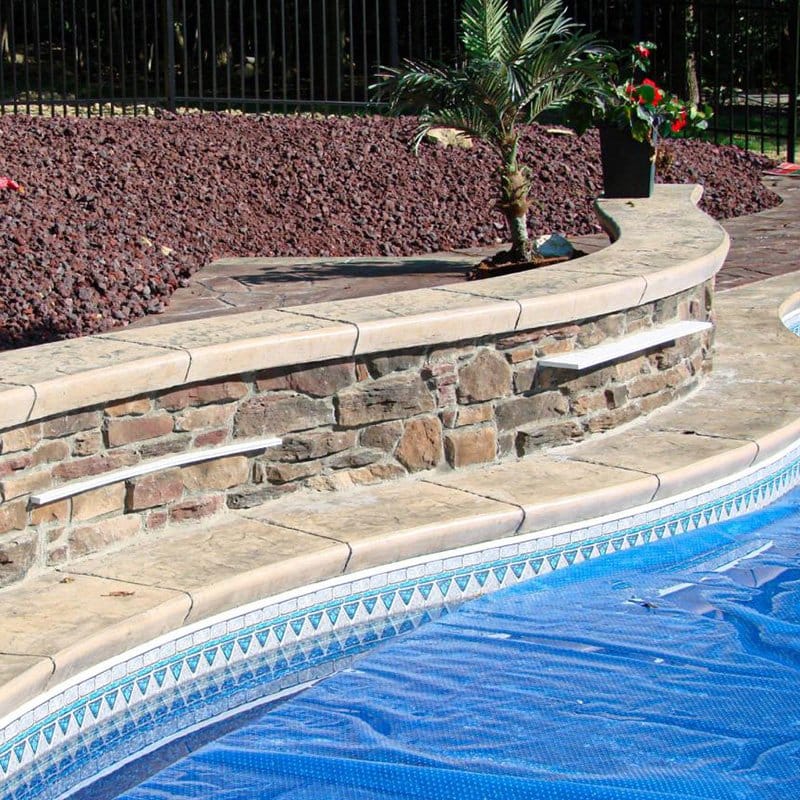
Protecting the pool shell and liner
Work around a pool needs care. Heavy equipment, vibration and falling debris can damage a shell or tear a vinyl liner. Before work starts, the plan should cover access, how the pool is protected during demolition and the pour, and who is responsible for what. We talk that through with you and your pool contractor.
For vinyl liner pools, we also install Pool Krete bases. Pool Krete is a pre-mixed blend of exfoliated vermiculite and portland cement with additives, used as the base under a vinyl liner. If you suspect a problem with the pool itself, we point you to a pool specialist.
Timing matters too. If the pool stays open during the work, ask how water, debris and dust will be kept out. If it will be drained or closed, confirm with your pool contractor who handles that and when it will be refilled.
Coordinating with your pool contractor
Most pool deck projects involve more than one trade. We work alongside your pool contractor, so the steps happen in the right order: the pool work, then the deck, with timing that avoids rework.
Reviews describe our crew working alongside other contractors, including a deck builder, on a shared schedule. Ask each contractor who handles what, when the pool will be open or closed, and who is responsible for protecting it. Put it in writing. Weather and scope changes can move dates, and clear communication keeps everyone on track.
Travertine and limestone options
Natural stone is another option. Our pool deck page lists travertine, tumbled or brushed, and select limestones. Stone can look beautiful and often stays cooler than dark concrete. It also has its own maintenance needs, including sealing and joint care.
Compare stone with concrete on cost, traction, upkeep and look. We will help you weigh them. If you want a seat wall or a retained garden bed beside the deck, our retaining walls work can complement the pool area.
Joints matter with stone. Wide or eroding grout lines are a common complaint on older paver-style surrounds, as Scott and Barb noted about their original deck. Ask how joints are filled and how they are maintained.
What a real pool deck project looks like
Scott and Barb wrote: "Bryan and his team did an excellent job completely redoing our pool hardscape." Their project included a natural waterfall, new coping, a concrete pad, Kool Deck and a new retaining wall. They also noted the project took longer than first planned, a reminder to build flexibility into your schedule.
To see how we handle decks and edges, visit our pool deck page.
Bryan listens to your concerns and addresses them, which is the point of the planning stage. Bring your questions early, and we will work through them before anything is poured.
Careful pool deck planning pays off in safer footing, a cooler surface and water that drains the right way. If you are thinking about a new deck, new coping or a Pool Krete base for a vinyl liner pool, we are glad to walk the site with you and your pool contractor and give you an honest plan.
Decks, cantilever coping and Pool Krete bases around your pool.Pool decksQuick answers
What is the best finish for a pool deck?
It depends on your priorities, but traction and heat are the big two. A broom finish or light texture gives good grip, and lighter colors or a cooler topping stay more comfortable. Ask to see samples wet and in full sun before you decide.
How much slope should a pool deck have?
Our pool deck practice is falls of 1 to 2 percent away from the pool. That gentle slope drains water off the surface without being noticeable. Plan where the water goes after it leaves the deck, whether that is a lawn, a swale or a drain.
What is the difference between cantilever and precast coping?
Cantilever coping is poured in place and usually has a bullnose finish, giving a continuous edge. Precast coping is made in sections and set along the pool edge. With either type, the joint between coping and deck needs a flexible sealant made for pool decks.
Does Midwest Hardscapes build pools?
No. We build pool decks, coping and Pool Krete bases for vinyl liner pools, working with your pool contractor. We do not build the pool itself. If you need a pool built or repaired, we can coordinate with the pool specialist you choose.
Is travertine good for pool decks?
It can be. Travertine, tumbled or brushed, and select limestones are options on our pool deck page. Natural stone often stays cooler than dark concrete but needs sealing and joint care. Ask for samples and compare traction when wet before you choose.
How do you protect my pool during deck work?
We plan access and talk through how the pool shell and liner will be protected during demolition and the pour before work starts. We also coordinate with your pool contractor so the work happens in the right order and responsibilities are clear.